
The vocabulary you use actively rewires your brain and dictates how you perceive the physical world around you. Cognitive scientists call this linguistic relativity, and mountains of peer-reviewed data confirm that your native tongue shapes your sense of time, space, and even color. While most people view language as a simple tool to describe reality, it actually operates as the master architect building your cognitive landscape. Speaking a language with strict gender rules makes you assign specific traits to inanimate objects, while directional languages give you an internal compass rivaling a homing pigeon. Examining the deepest intricacies of human speech reveals the profound neurological boundaries constructed by the very syllables you speak every day.
Fact 1: Discovering Invisible Colors Through Vocabulary
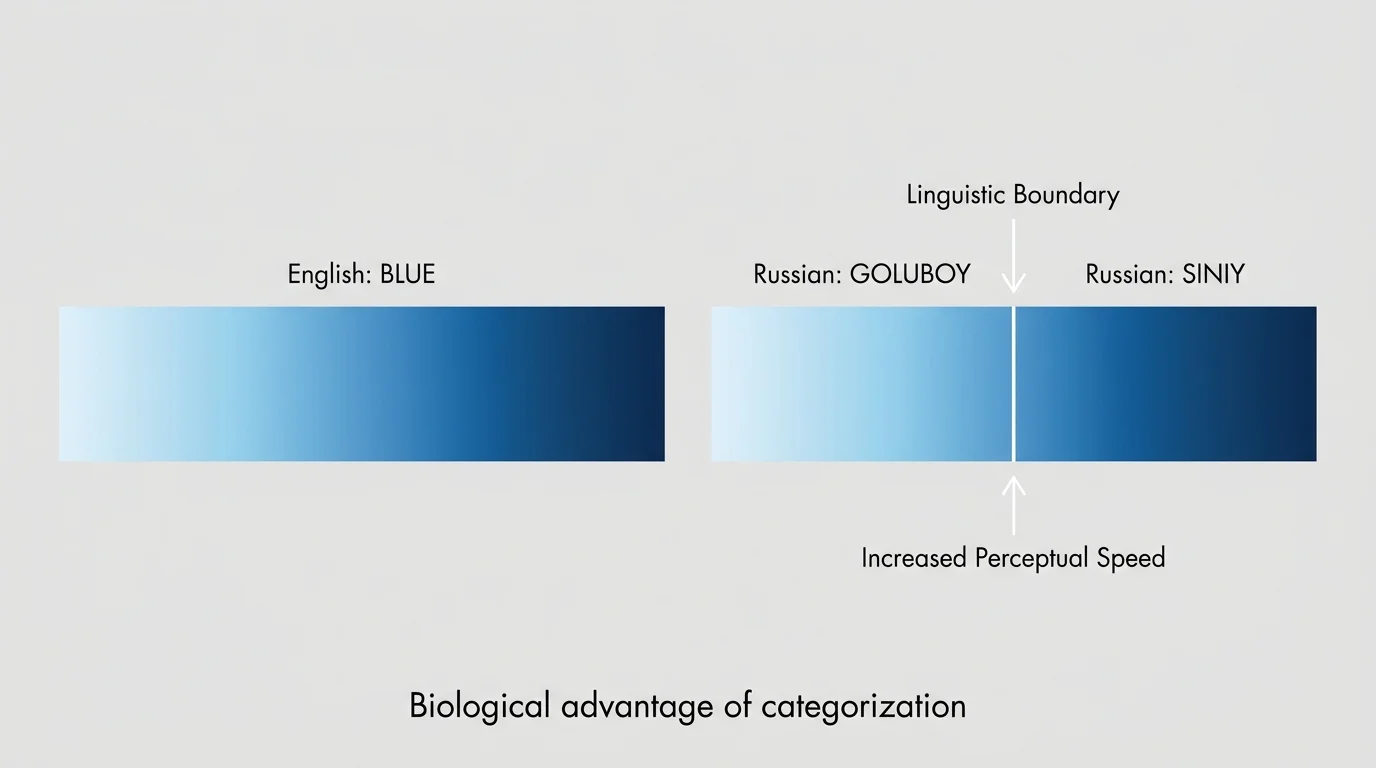
If you speak English, you likely group the sky, the ocean, and a navy suit under the single broad category of blue. Russian speakers do not share this visual reality. The Russian language forces its speakers to differentiate between siniy, referring to darker shades of blue, and goluboy, referring to lighter shades. Because Russian requires this obligatory distinction, native speakers physically perceive the boundary between these colors with greater acuity.
Researchers testing these linguistic populations discovered a startling biological advantage. According to peer-reviewed neurological studies, Russian speakers identify shifting shades of blue significantly faster than English speakers. Having a distinct linguistic label forces your brain to categorize visual input efficiently, literally causing you to perceive a stark contrast where others see a subtle, continuous gradient. Your eyes only capture the light; your vocabulary dictates the color you actually see.

Fact 2: Developing a Biological Compass Through Absolute Direction
Imagine walking into a massive, windowless building and instantly pointing perfectly to the north. While most people would struggle, speakers of Guugu Yimithirr—an Indigenous Australian language from the Cape York Peninsula—perform this feat effortlessly. Their vocabulary completely lacks relative spatial terms like left, right, forward, or backward. Instead, they rely strictly on cardinal directions for every spatial description.
If you spoke Guugu Yimithirr, you would never say, “The cup is on your right.” You would say, “The cup is to your southwest.” This absolute directional requirement forces native speakers to maintain a constant, subconscious awareness of their geographic orientation at all times. Extensive linguistic field research confirms that speakers of these languages develop an internal spatial compass that rivals the navigational instincts of migratory birds. Your brain flawlessly maps your surroundings when your daily grammar demands it.
Fact 3: Assigning Personalities to Inanimate Objects
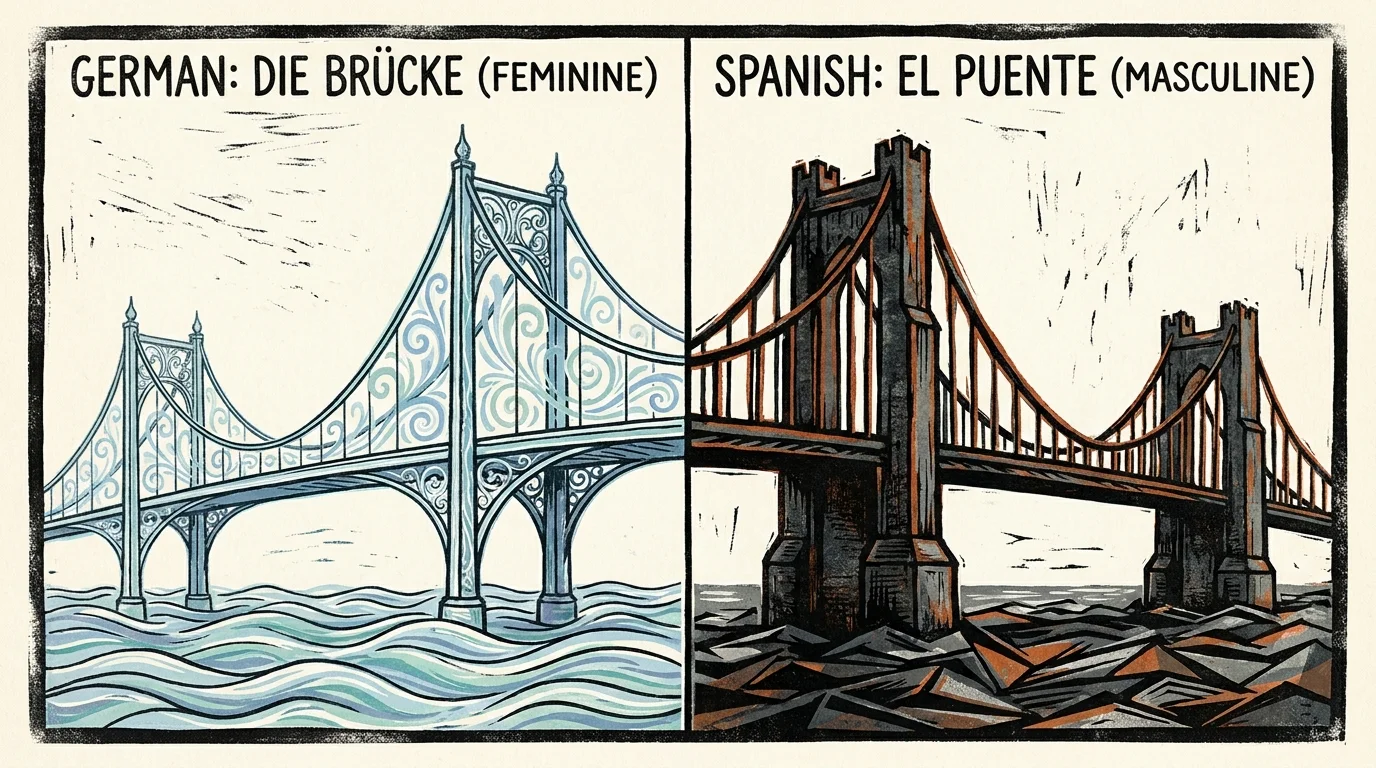
Grammatical gender invisible shapes your subconscious judgment of ordinary items. Languages like German and Spanish assign distinct masculine or feminine genders to nouns, and these arbitrary categories completely alter how speakers describe the physical world. Consider a simple bridge; the word is feminine in German and masculine in Spanish.
When cognitive scientists ask German speakers to describe bridges, they frequently use stereotypically feminine adjectives like beautiful, elegant, slender, and fragile. Conversely, Spanish speakers describe the exact same concrete structures using masculine adjectives like towering, strong, sturdy, and dangerous. The same phenomenon occurs with keys—masculine in German, resulting in descriptions like heavy and jagged, but feminine in Spanish, yielding descriptions like intricate and little. Your grammar silently dictates whether you view a lifeless object as delicate or robust.

Fact 4: Altering Memory and Blame in Eyewitnesses
The syntax you use to describe accidental events directly manipulates your memory of those events. English speakers heavily prioritize the active agent, constantly assigning blame even when a situation is clearly unintentional. You instinctively say, “John broke the vase,” placing the subject front and center. Spanish and Japanese speakers utilize a more passive, reflexive construction that translates roughly to, “The vase broke itself.”
This structural difference creates a massive divergence in eyewitness memory. Empirical studies on memory and language tracked subjects watching videos of people intentionally and accidentally popping balloons. While everyone remembered who popped the balloons intentionally, English speakers were significantly more likely to remember who caused the accidental pops. Spanish speakers remembered the event clearly but naturally filtered out the accidental instigator. Your syntax directly influences your inclination to penalize others and alters the specific details your brain chooses to record.
Fact 5: Erasing Mathematics Through Numberless Speech
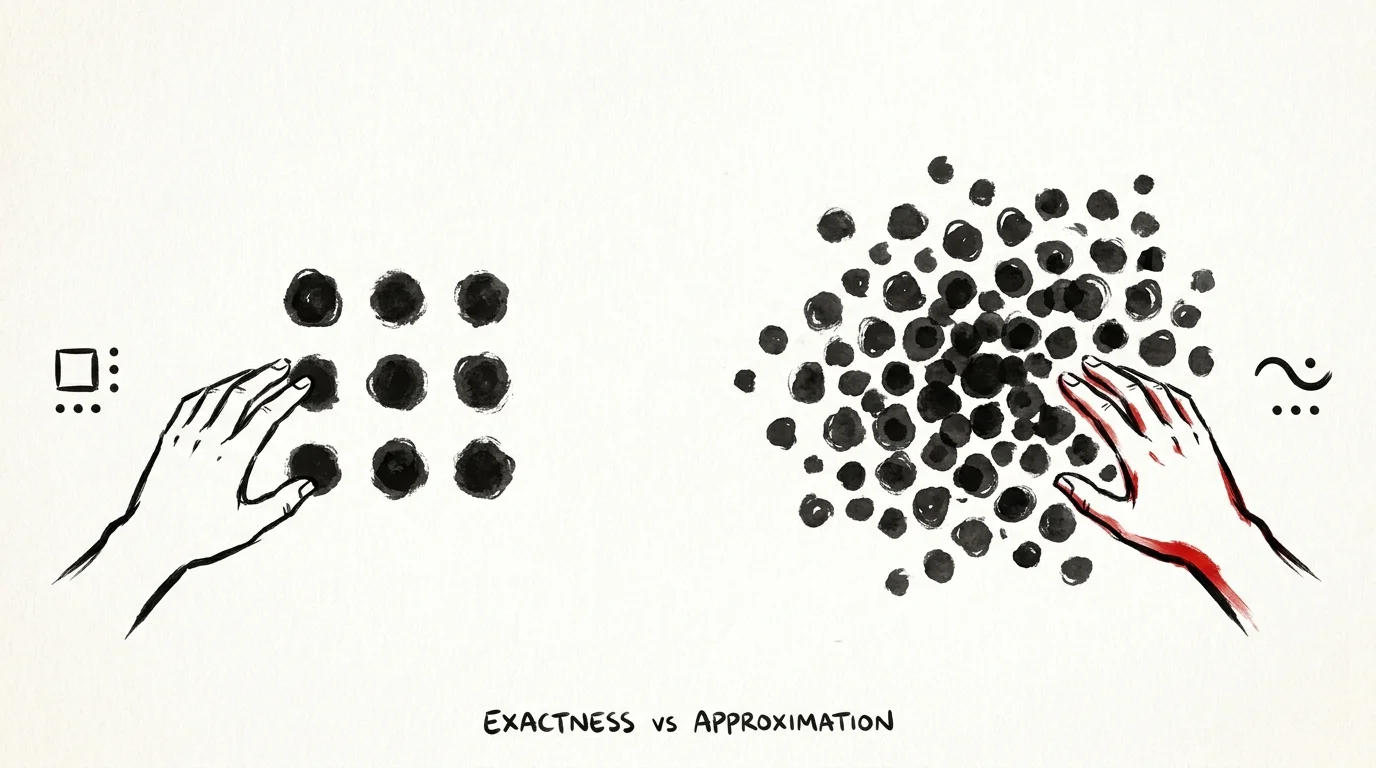
Your ability to comprehend precise mathematics relies entirely on the numerical vocabulary available to you. The Pirahã people, an indigenous hunter-gatherer tribe residing deep in the Brazilian Amazon, speak a language that completely lacks words for exact numbers. They rely exclusively on relative terms approximating a few or many, functioning entirely without precise integers like four, seven, or ten.
Cognitive scientists evaluating numerical cognition discovered that this linguistic gap prevents the Pirahã from performing exact mathematical matching tasks. When asked to place exactly seven batteries in a line to match a researcher’s display, they struggle to duplicate the exact quantity once the number exceeds three. Without the linguistic scaffolding to anchor the concept of specific integers, the human brain simply cannot retain or replicate exact large quantities.
Fact 6: Building Financial Wealth Through Futureless Grammar
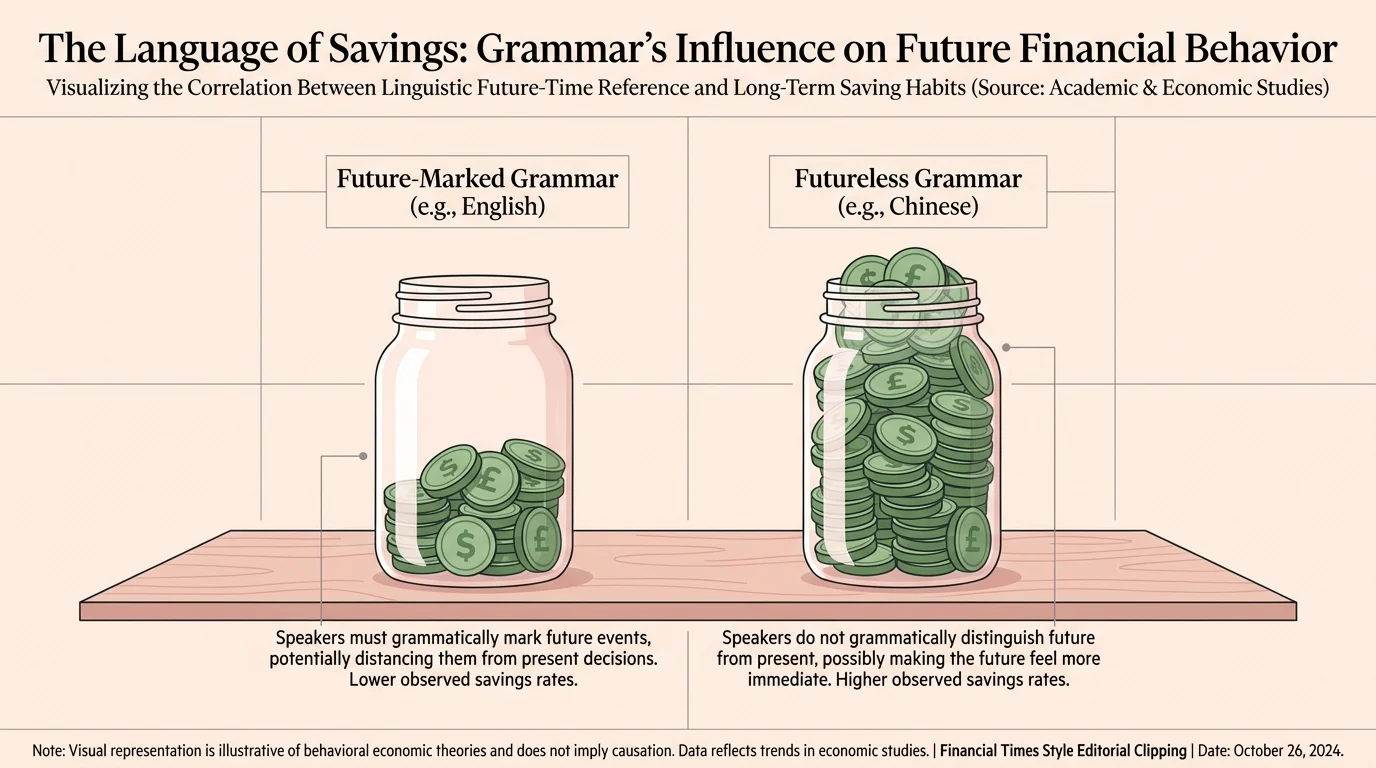
The grammatical tense you use to discuss the future profoundly impacts your bank account and your physical health. Some languages, like English, force speakers to heavily distinguish between the present and the future. You say, “It is raining today,” but you must shift syntax to say, “It will rain tomorrow.” Other languages, such as Mandarin Chinese, are considered futureless; they use the same phrasing for both, effectively saying, “It rain tomorrow.”
A comprehensive economic analysis analyzing global behaviors revealed a shocking correlation. Speakers of futureless languages are 39 percent more likely to save money for retirement, are significantly less likely to smoke, and experience lower rates of obesity. Because their grammar makes the future feel as immediate and real as the present, they experience almost zero psychological distance between their current actions and future consequences. Your grammatical tenses quietly dictate your long-term discipline.

Fact 7: Switching Personalities by Switching Tongues
People who speak multiple languages frequently experience a profound psychological shift known as frame-switching. The language you choose to speak actively triggers the cultural norms, social expectations, and behavioral traits associated with that specific tongue. A bilingual person does not just translate words; they literally translate their personality to match the linguistic environment.
When bilingual individuals take standardized personality tests, their scores fluctuate wildly depending on the language of the exam. A subject testing in English—a language deeply tied to individualistic cultures—often scores higher in extraversion, assertiveness, and independence. When taking the exact same test in Japanese or Korean, that same person scores higher in agreeableness and community-oriented values. The cultural weight embedded in your vocabulary activates distinct neural pathways, causing you to instantly modify your body language, emotional responses, and problem-solving strategies.

Turning Linguistic Relativity Into an Everyday Advantage
You can actively harness the mechanics of linguistic relativity to upgrade your daily life and improve your mental habits. Understanding that words construct reality gives you the leverage to reprogram your internal dialogue. If you struggle with financial planning or procrastination, try framing your future goals using present-tense phrasing. By telling yourself, “I am securing my retirement,” rather than, “I will save money next year,” you artificially collapse the psychological distance to your goals, making them feel urgent and immediate.
You can also use this science to foster empathy and defuse conflict. During a heated argument, intentionally switch from active, blame-heavy syntax to passive, event-focused phrasing. Instead of declaring, “You ruined this project,” shift your language to, “The project fell apart.” This simple linguistic adjustment lowers defensiveness and forces both parties to focus on solving the structural issue rather than attacking the person. When you deliberately choose your syntax, you actively curate your emotional responses and shape the reality of everyone around you.
Frequently Asked Questions
Can learning a new language change my brain structure?
Yes; acquiring a new language physically increases the density of your gray matter and strengthens the white matter tracts responsible for rapid information processing. As you absorb new grammatical rules, spatial concepts, and phonetic sounds, your brain literally builds fresh neural networks to accommodate these novel ways of thinking. This dense cognitive workout improves your baseline memory, enhances your multitasking capabilities, and actively shields your brain against cognitive decline and dementia in later life.
What exactly is the Sapir-Whorf hypothesis?
The Sapir-Whorf hypothesis—often referred to as linguistic relativity—posits that the structure and vocabulary of a language determine or heavily influence how its speakers perceive the world. Modern linguists and cognitive scientists largely reject the extreme version of this theory, which claims language completely restricts your ability to think. However, they universally embrace the softer, proven version, which demonstrates that language powerfully guides your attention, categorizes your perceptions, and subtly molds your daily behavior.
Does lacking a word mean you cannot experience the concept?
Not entirely; you can absolutely feel a complex emotion or grasp a visual concept without having a specific dictionary term for it. However, lacking a dedicated linguistic label makes recognizing, recalling, and communicating that concept exponentially harder. Having precise vocabulary acts as a vital cognitive shortcut. When you possess the exact word for a complex idea, your brain processes that information rapidly, stores it efficiently, and retrieves it effortlessly when making decisions.
How fast does language alter human perception?
Your brain adapts surprisingly fast to new linguistic frameworks and categories. Controlled laboratory experiments demonstrate that teaching human subjects entirely novel color terms or artificial directional categories begins to shift their perceptual grouping within just a few hours. The more intensely and consistently you use the new vocabulary, the faster your cognitive boundaries realign to match the rules of the new language.
Keep Expanding Your Cognitive Horizons
Understanding the invisible mechanics behind human language transforms how you interact with your own thoughts. You hold the profound power to adopt entirely new perspectives simply by expanding your daily vocabulary or dedicating time to explore a foreign tongue. Dive into academic linguistic journals, study the syntax of distant cultures, and challenge the boundaries of your native vocabulary. Every new word you acquire serves as a fresh lens through which to view the universe; keep expanding your lexicon, and watch your perception of reality expand alongside it.