You interact with hundreds of engineered objects daily without realizing the hidden brilliance built into their designs. From life-saving safety features masked as manufacturing quirks to aerodynamic hacks hiding in plain sight, everyday items pack astonishing secrets that completely change how you view your surroundings. The hole at the top of your pen cap, the mysterious cylinder on your power cord, and the tiny opening in an airplane window are not random accidents. They represent deliberate scientific choices grounded in physics, human anatomy, and fluid dynamics. By understanding these subtle design elements, you unlock a deeper appreciation for the modern world and gain practical tricks to use your belongings more effectively.
The Mind-Bending Hook: Safety Hidden in Plain Sight

Fact 1: The Life-Saving Hole in Your Pen Cap
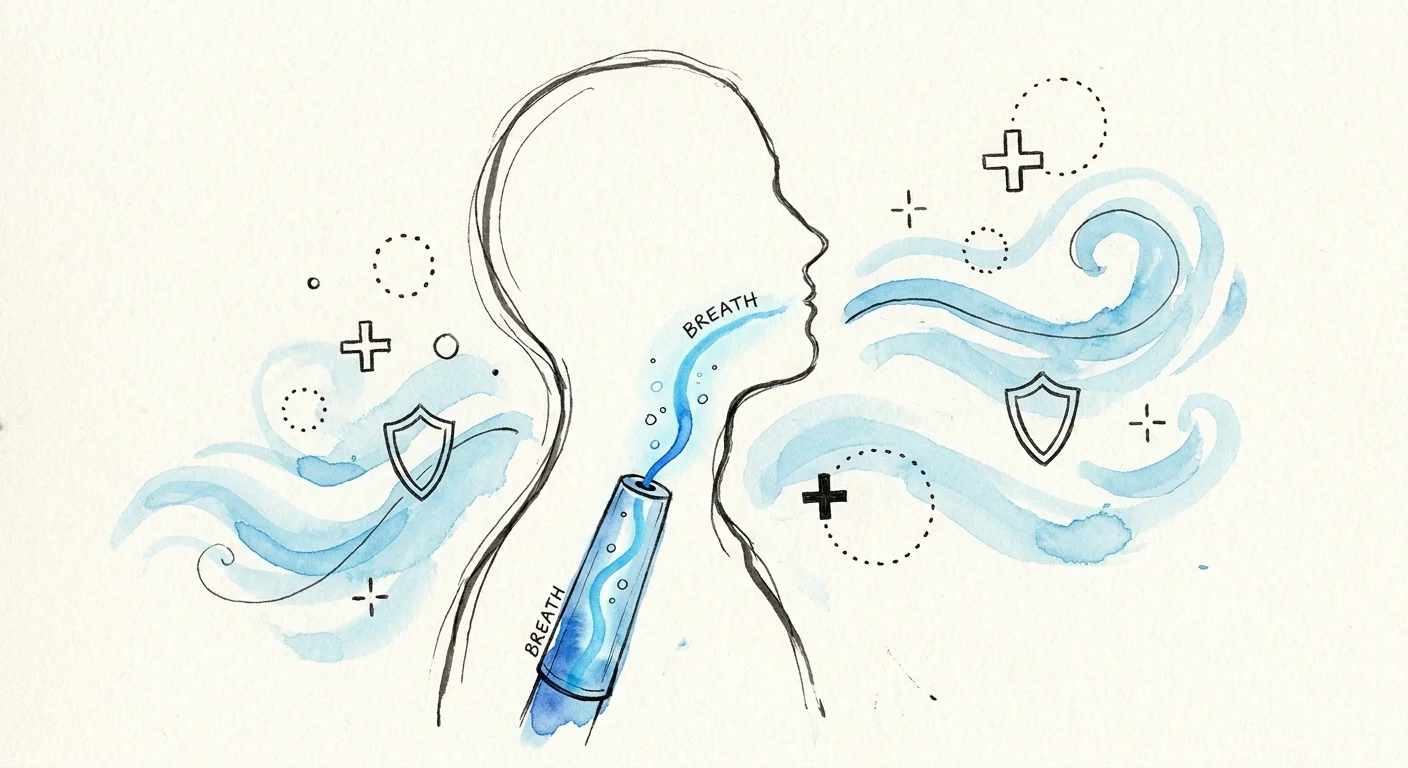
Many people chew on their pens during moments of deep concentration. Recognizing this widespread habit, the BIC company implemented a remarkably impactful design change in 1991. They added a distinctive hole to the top of their popular crystal pen caps. You might instinctively assume engineers added this opening to equalize air pressure so the ink flows smoothly, but the truth is rooted entirely in human safety. If someone accidentally inhales the cap, that tiny hole provides a crucial airway to prevent complete suffocation until medical help arrives. This simple manufacturing tweak has dramatically reduced choking fatalities; medical agencies like the Centers for Disease Control and Prevention consistently emphasize the importance of breathable airways when foreign objects lodge in the throat. Today, this brilliant modification serves as an international safety standard for stationery worldwide.
Fact 2: The Bleed Hole in Airplane Windows
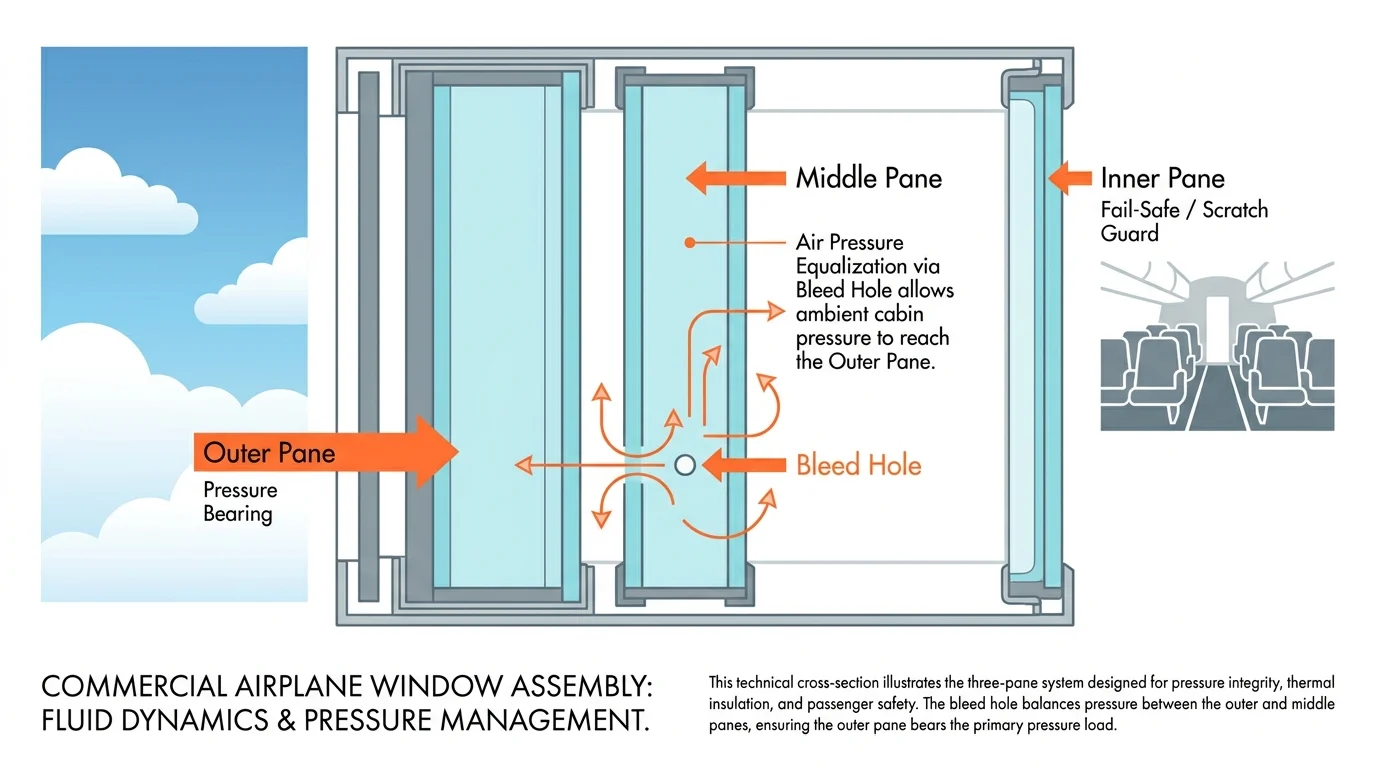
When you stare out of an airplane window at cruising altitude, you will eventually notice a tiny hole near the bottom edge of the glass. Engineers call this vital feature a bleed hole, and it keeps you safe at thirty-five thousand feet. Commercial airplane windows consist of three separate acrylic panes. The thick outer pane handles the massive pressure difference between the pressurized cabin and the thin atmosphere outside. The middle pane contains the bleed hole, which balances the air pressure between the passenger cabin and the empty air gap between the panes. This deliberate design ensures the outer pane takes the maximum structural stress while the inner pane remains a pristine, redundant fail-safe. Furthermore, the bleed hole prevents trapped moisture from freezing or fogging up the acrylic, guaranteeing you always have a perfectly clear view of the sky.

The Evidence Trail: Physics Masked as Quirks

Fact 3: The Aerodynamic Secret of Golf Ball Dimples
If you examine a standard golf ball, you will see hundreds of small indentations covering its entire surface. During the early days of the sport, golfers realized older, scuffed balls traveled significantly farther than pristine, smooth ones. Researchers eventually applied fluid dynamics to this mystery and proved that smooth golf balls suffer from massive aerodynamic drag, limiting their flight to roughly half the distance of a textured ball. The dimples create a turbulent boundary layer of air that aggressively clings to the ball as it spins. This turbulence heavily reduces the wake behind the ball, allowing it to slice through the air with astonishingly low resistance. According to journals like Scientific American, this masterclass in aerodynamics allows a professional drive to clear nearly three hundred yards—a physical impossibility for a perfectly smooth sphere.

Fact 4: The Strategic Fuzz on Tennis Balls
A fresh tennis ball feels undeniably distinct due to its bright yellow, fuzzy exterior. That thick fuzz—scientifically known as the nap—does far more than provide a pleasant tactile texture. Without it, a tennis ball would bounce off the racket and ricochet across the court at completely uncontrollable speeds. As the ball moves through the air, the fuzz acts as a parachute by creating severe aerodynamic drag. This intentional friction slows the ball down just enough so players can actually track the trajectory and return the fast-paced shot. The nap also vigorously grabs the woven strings of the tennis racket upon impact; this allows players to impart heavy topspin or aggressive slice onto the ball. As the fuzz flattens during a brutal match, the ball’s trajectory changes noticeably, prompting professionals to frequently inspect multiple balls before serving.

Meaning and Context: Electronics and Structural Integrity
Fact 5: The Ferrite Bead on Your Laptop Charger
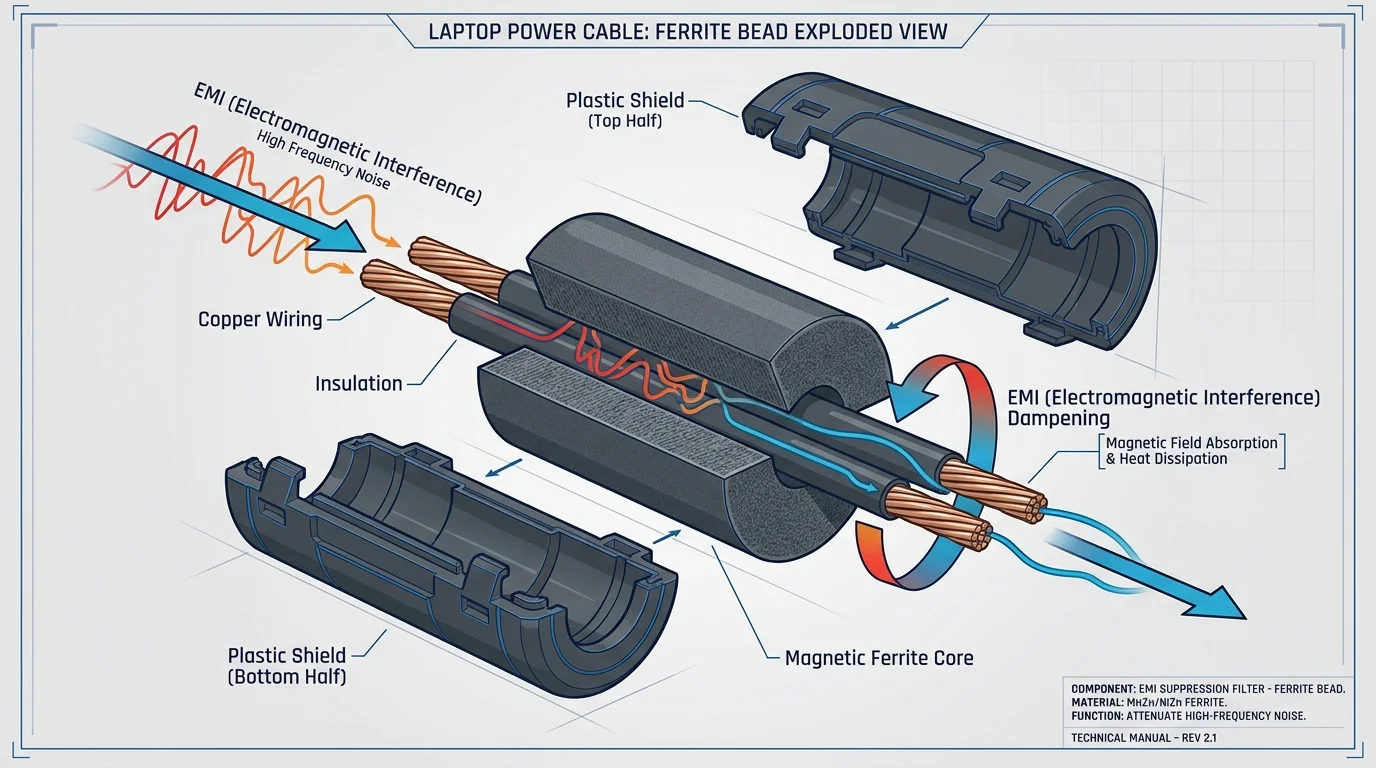
You have undoubtedly noticed the thick, cylindrical lump near the end of your laptop charger cord. This vital component is called a ferrite bead, and it acts as an invisible shield for your sensitive electronics. Long power cables essentially act as powerful antennas that can accidentally pick up or broadcast radio wave interference across your home. The ferrite bead contains a hollow core of magnetic iron oxide that effortlessly absorbs these high-frequency electromagnetic noise signals and dissipates them safely as low-level heat. Without this unassuming block, your computer monitor might flicker wildly, or your speakers could emit a constant static buzz whenever your device draws power. The Institute of Electrical and Electronics Engineers highlights components like these as crucial low-pass filters that keep our wireless homes functioning seamlessly without destructive electronic crosstalk.

Fact 6: The Punt at the Bottom of a Wine Bottle
Pick up a heavy bottle of wine, and you will feel a deep, curved indentation hidden at the base. Known in the industry as a punt, this structural feature traces its origins back centuries to the era of hand-blown glass. It originally ensured the bottle could stand upright without a sharp, jagged point protruding from the bottom. Modern automated manufacturing completely eliminated the need for glassblowers, but the punt remains today for excellent scientific reasons. Pushing the base inward adds immense structural integrity to the glass cylinder. This reinforcement is particularly crucial for sparkling wines like Champagne, which must contain heavy internal pressure without exploding. Additionally, the punt creates a narrow, depressed channel at the bottom edges that neatly collects loose sediment, preventing gritty, bitter particulates from sliding into your glass when you pour a vintage red wine.
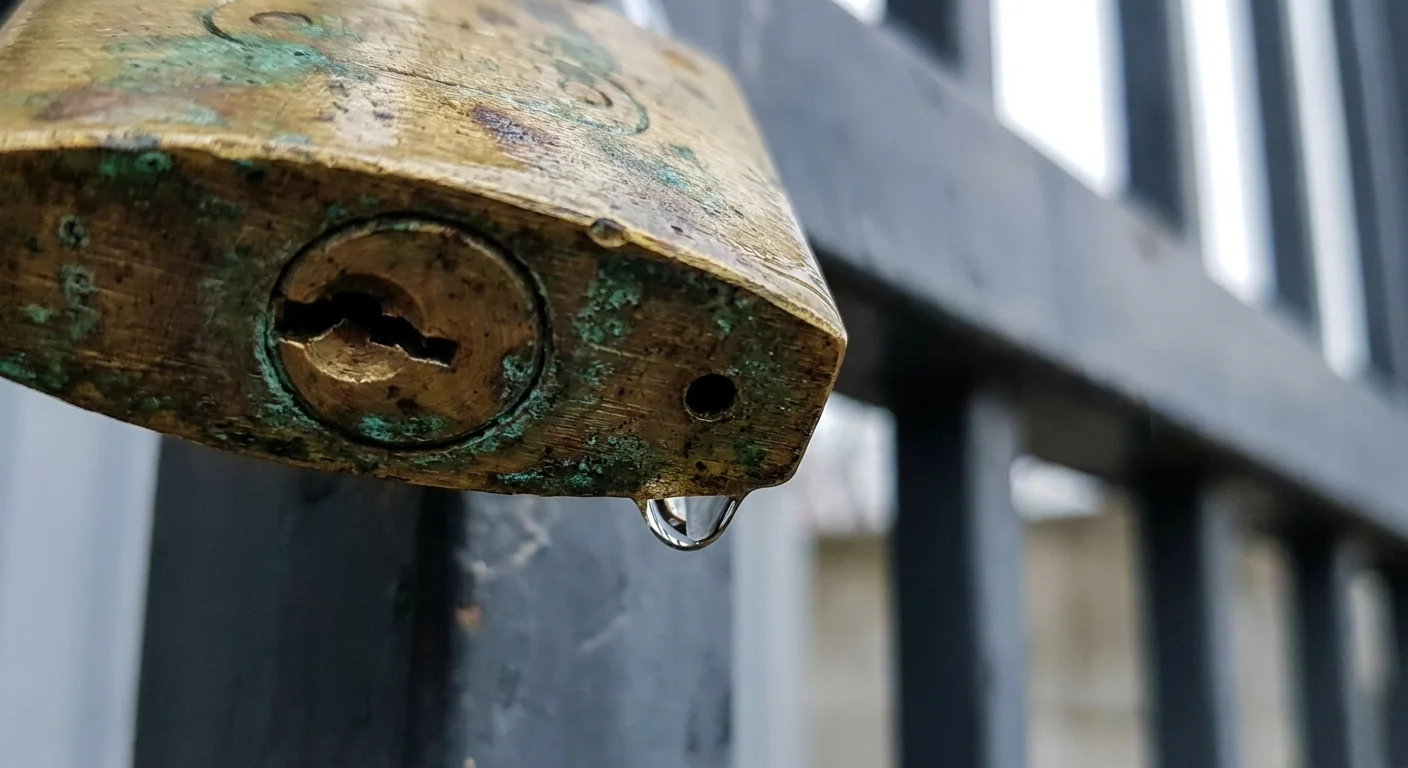
Fact 7: The Drainage Hole in Your Padlock
Look very closely at the bottom edge of a heavy-duty outdoor padlock, right next to the keyhole. You will spot a minuscule opening that looks exactly like a manufacturing defect or a drilling error. This is actually an essential drainage hole explicitly designed to keep the lock fully functional in harsh, unpredictable weather conditions. When left outdoors, padlocks endure relentless rain, sleet, and snow. Without this tiny escape route, water would quickly pool inside the metal casing. This trapped moisture would rapidly rust the internal springs or freeze solid during a harsh winter, effectively destroying the delicate internal pins. It also serves a highly practical maintenance purpose. If your lock ever feels stiff, you can inject a few drops of penetrating oil directly into this drainage hole to coat the internal mechanism and get the key turning smoothly again.
Everyday Impact: Practical Wearable Hacks
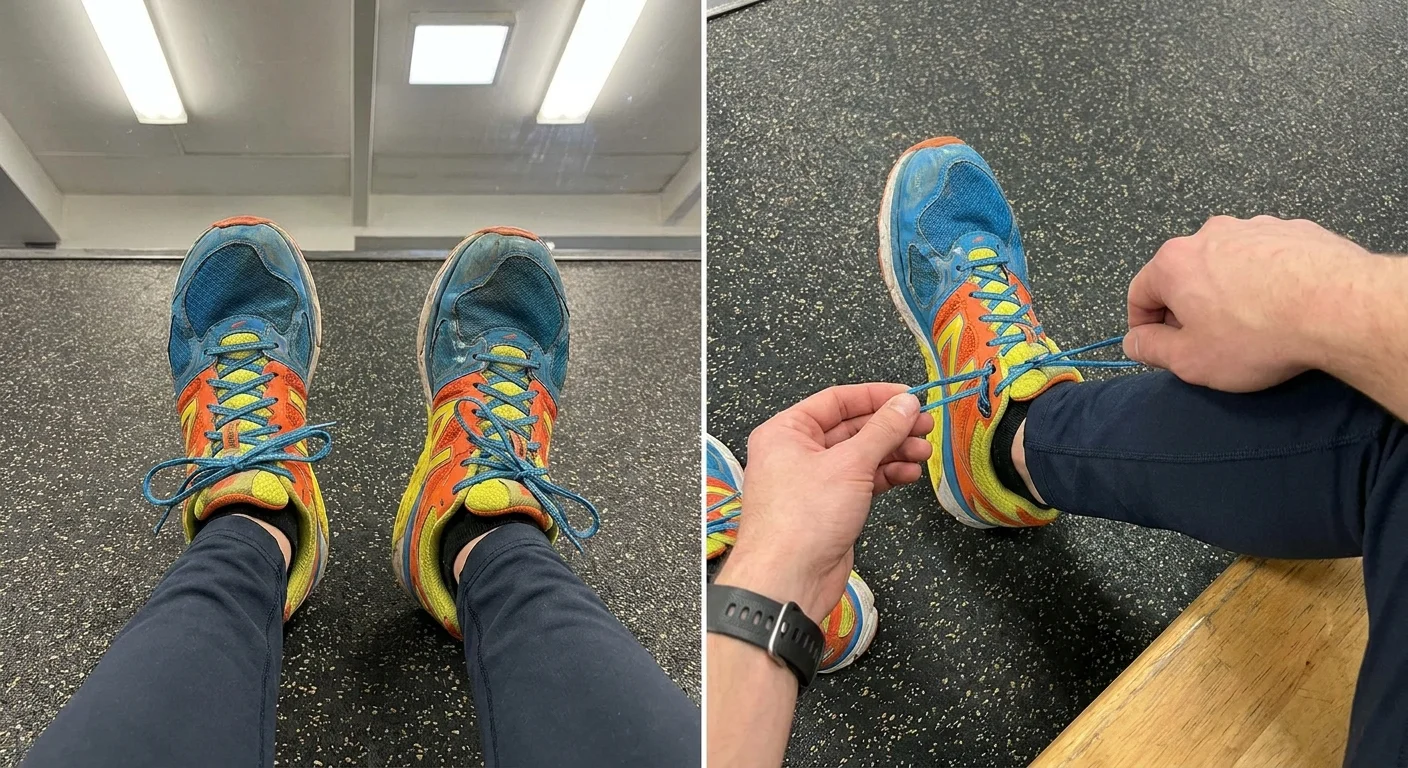
Fact 8: The Extra Shoelace Hole for Heel Locking
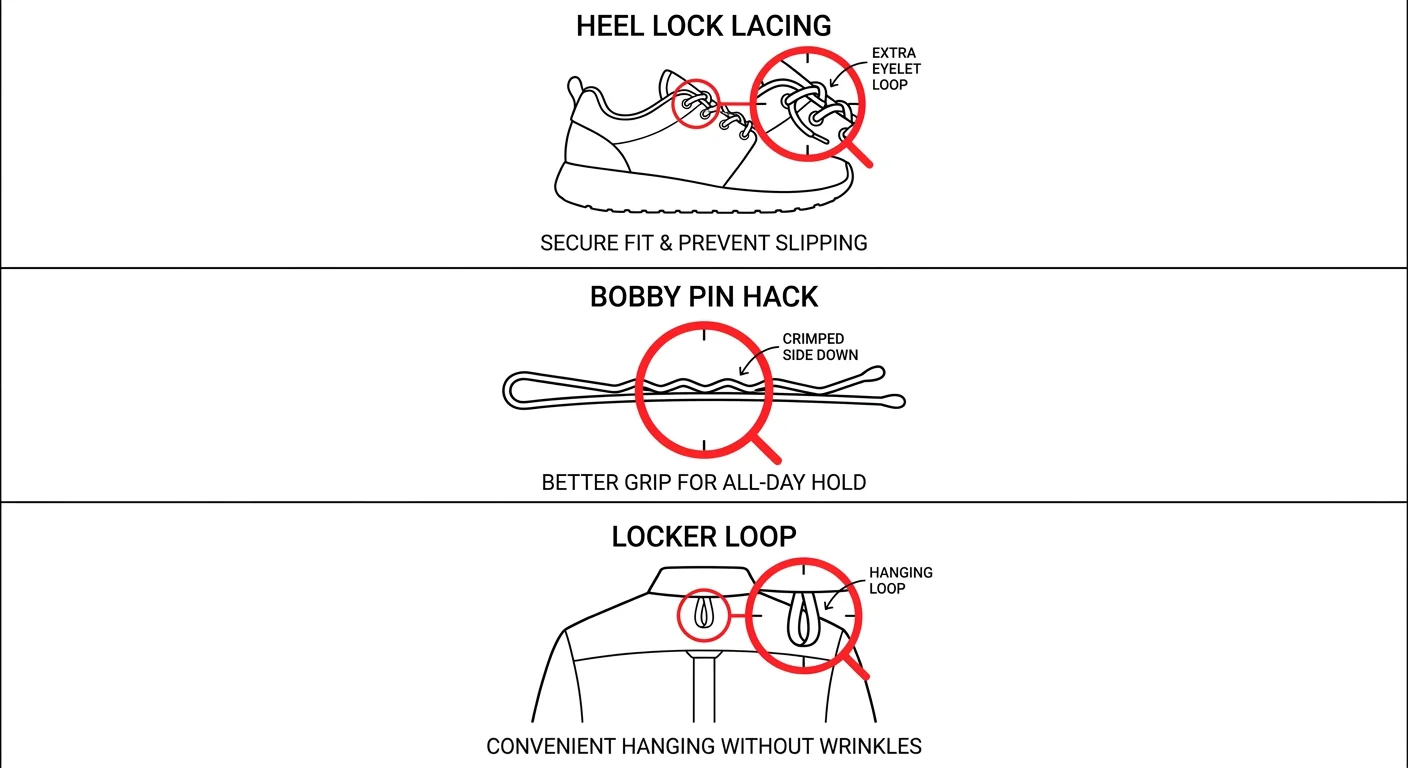
Look down at your running shoes right now. At the very top edge, sitting near your ankle bone, you will see an extra lace eyelet that almost nobody uses. Footwear engineers deliberately include this specific hole to enable a highly effective lacing technique called the heel lock—also known as the runner’s loop. By threading your laces backward through these top holes to create a tight loop before tying them, you secure your heel firmly against the stiff back of the shoe. This tension utterly stops your foot from sliding forward on steep descents. Experts in podiatry journals frequently recommend this exact method to prevent painful friction blisters and bruised toenails. To execute it yourself, run the lace up the outside to create a loop, cross the opposite lace through it, and pull tightly downward.
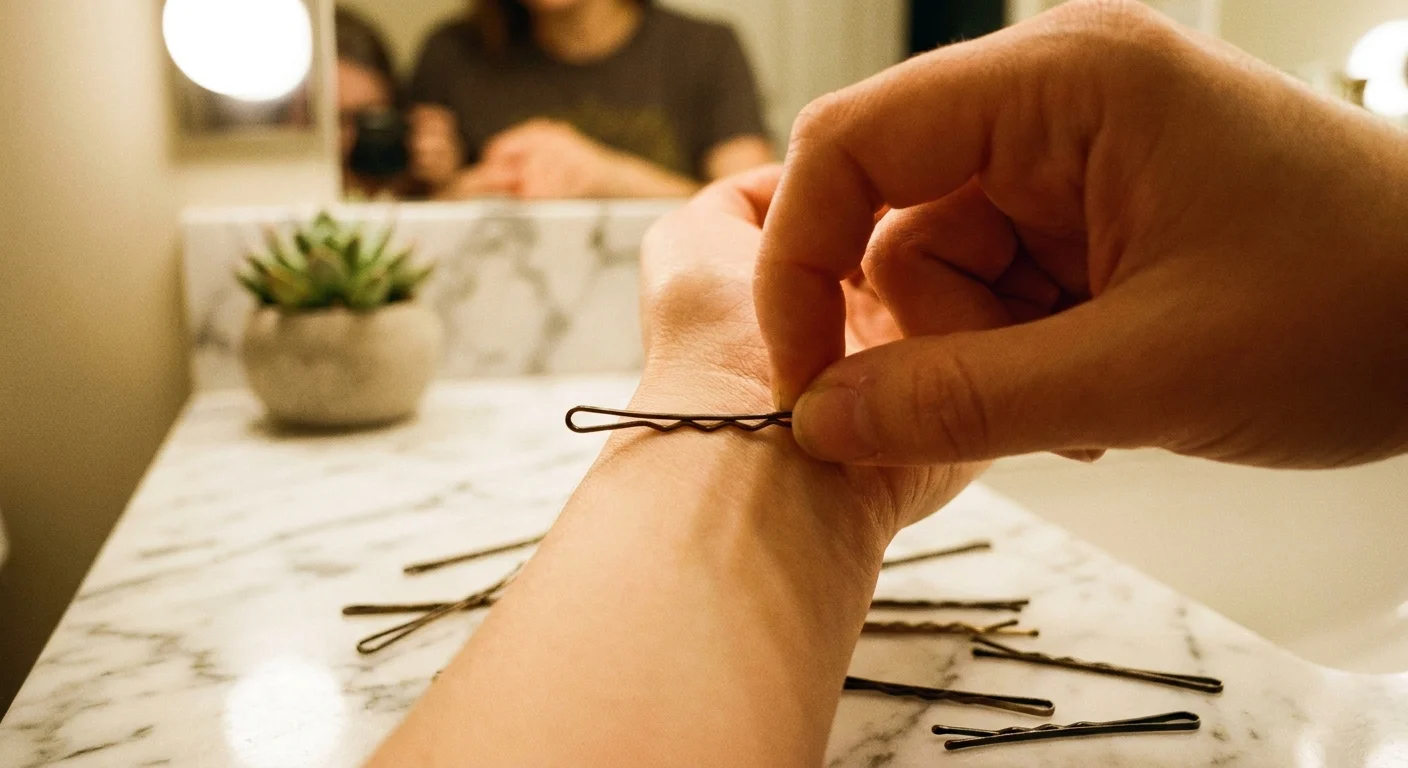
Fact 9: The True Purpose of the Bobby Pin Zig-Zag
Hair accessories often prioritize daily function over aesthetic form, and the ubiquitous bobby pin serves as a prime example of massive user error. Most people instinctively slide bobby pins into their hair with the wavy, zig-zag side facing proudly outward, incorrectly assuming the deep ridges are meant to look decorative. In reality, you are supposed to wear the pin with the wavy side facing directly down against your scalp. The metal ridges are explicitly engineered to grip the underlying layers of hair tightly, anchoring the pin firmly in place and preventing it from sliding completely out of your hair as you move throughout the day. The flat top side of the pin then gently pushes the uppermost outer layer of your hair down flat, delivering a remarkably smooth, polished finish that holds its shape for hours.

Fact 10: The Locker Loop on Your Dress Shirt
If you inspect the back of a classic button-down dress shirt—exactly where the back yoke meets the vertical pleat between your shoulder blades—you will find a small, sewn fabric loop. This fascinating feature originated with East Coast sailors who desperately needed a reliable way to hang their uniform shirts on bulkheads without causing massive wrinkles in cramped ship quarters. The feature eventually transitioned into mainstream collegiate fashion during the 1960s. Ivy League university students enthusiastically dubbed them locker loops because they allowed busy student athletes to hang their fresh shirts on hooks inside gym lockers without lugging around bulky wooden hangers. Interestingly, young men would occasionally cut the loops off their shirts to signal to their peers that they were actively in a committed relationship. Today, you can still use this sturdy loop to keep your formal shirts entirely wrinkle-free.
Frequently Asked Questions
Why do manufacturers rarely explain these everyday design features?
Most companies assume consumers intuitively understand these elements or rely heavily on standard industry practices that simply do not require explicit marketing campaigns. Features like the padlock drainage hole or the laptop ferrite bead exist purely as basic engineering standards. They are strictly functional necessities rather than glamorous unique selling points, so brands rarely waste valuable advertising budgets explaining the physics behind them to the general public.
Are there other secret safety features hidden in normal household items?
Absolutely. Modern electrical extension cords often feature slightly asymmetrical prongs so you cannot accidentally reverse the polarity when plugging them into an outlet, effectively protecting you from severe electric shocks. Similarly, chemical manufacturers add an incredibly harsh bitterant to pressurized cans of compressed air dusters; this invisible safety feature instantly deters deliberate inhalation by making the gas taste unbearably foul.
Do all golf balls have the exact same number of aerodynamic dimples?
No, they vary significantly across different brands and models. The number of dimples usually ranges between three hundred and five hundred, depending heavily on the manufacturer and the specific flight characteristics they want the ball to achieve. Each distinct dimple pattern is fiercely patented to optimize crucial lift and minimize aerodynamic drag for wildly different styles of professional and amateur play.
Can I remove the ferrite bead from my cables to make them lighter?
You should never attempt to remove, crack, or tamper with the heavy ferrite bead on your electronic cables. Cutting it off completely exposes your sensitive device to overwhelming electromagnetic interference. This deliberate lack of shielding can permanently disrupt high-speed data transfers, cause your display screen to flicker unreliably, and severely damage the delicate internal audio components of your expensive hardware.
Keep Questioning Your World
The fast-paced modern world around you is constantly packed with invisible, life-changing genius. The very next time you tightly lace up your sneakers for a run, securely plug your laptop into the wall, or casually pop the plastic cap off a ballpoint pen, take a brief moment to deeply appreciate the centuries of rigorous engineering and brilliant problem-solving hiding right in the palm of your hand. You absolutely do not need to walk into a high-tech laboratory to find profound scientific marvels; they sit quietly on your office desk, ride along in your pockets, and hang silently in your closet. Share these astonishing discoveries with your friends, stay deeply curious about your environment, and never stop questioning the true purpose behind the seemingly mundane objects you interact with every single day.