Nature equips creatures with bizarre animal defenses that read like science fiction, from shooting blood out of their eyes to weaponizing their own broken bones. You might think fangs, speed, and camouflage are the standard tools for survival in the wild, but evolutionary pressure pushes animals into incredibly strange, hyper-specialized adaptations. When a predator attacks, some species trigger weird animal facts into reality—expelling internal organs, detonating toxic explosions, or instantly drowning attackers in expanding slime. Understanding these strange animal behaviors reveals the extreme lengths life will go to just to see another day. You can observe the sheer brilliance of biology by exploring the most mind blowing animal facts surrounding these ten unimaginable survival strategies.
The Evidence Trail: Documenting Bizarre Animal Defenses
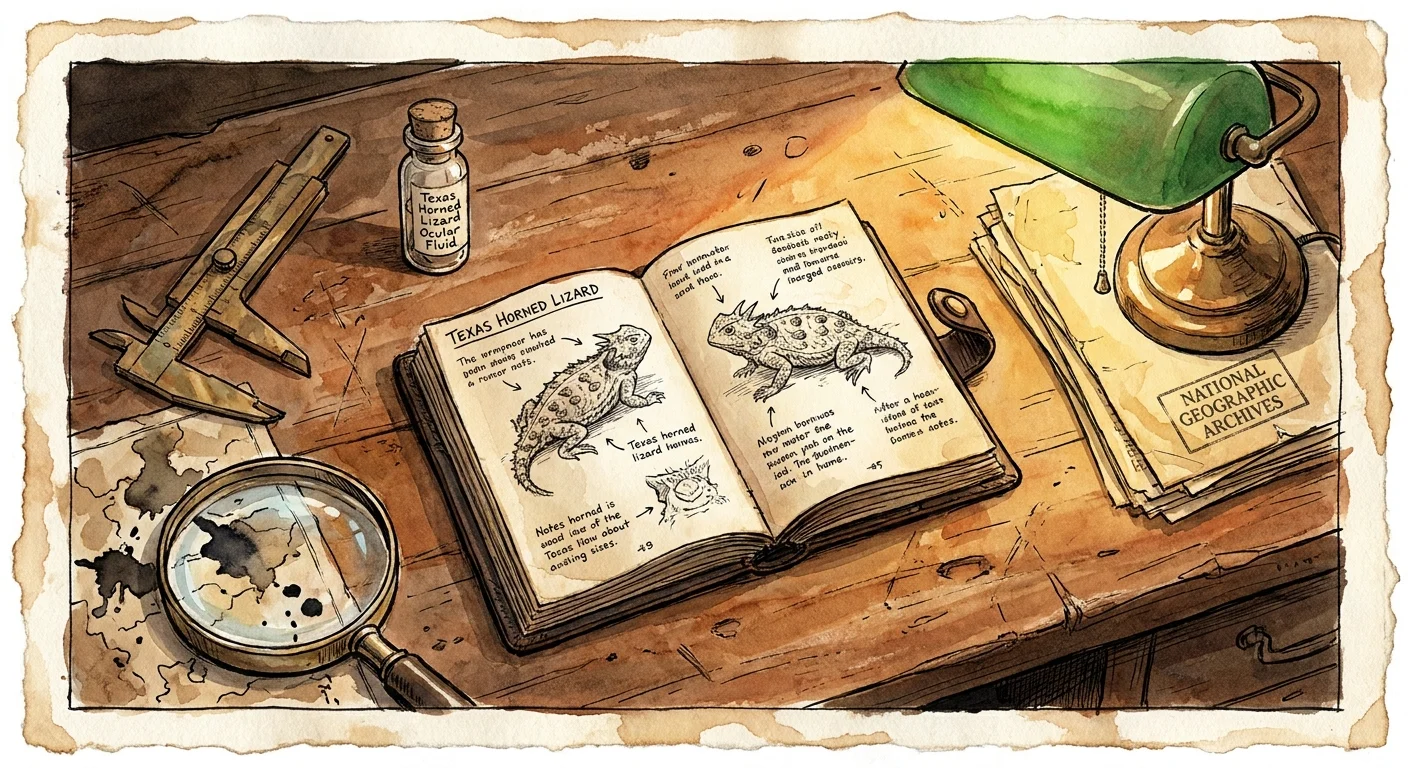
Field researchers and evolutionary biologists spend decades tracking species across remote ecosystems to verify the unbelievable. What sounds like a wild myth frequently turns out to be a highly specialized, scientifically documented survival mechanism. You can trace the documentation of these ten phenomenal species to understand the sheer physical extremes of nature.
1. The Texas Horned Lizard and Its Blood-Shooting Eyes
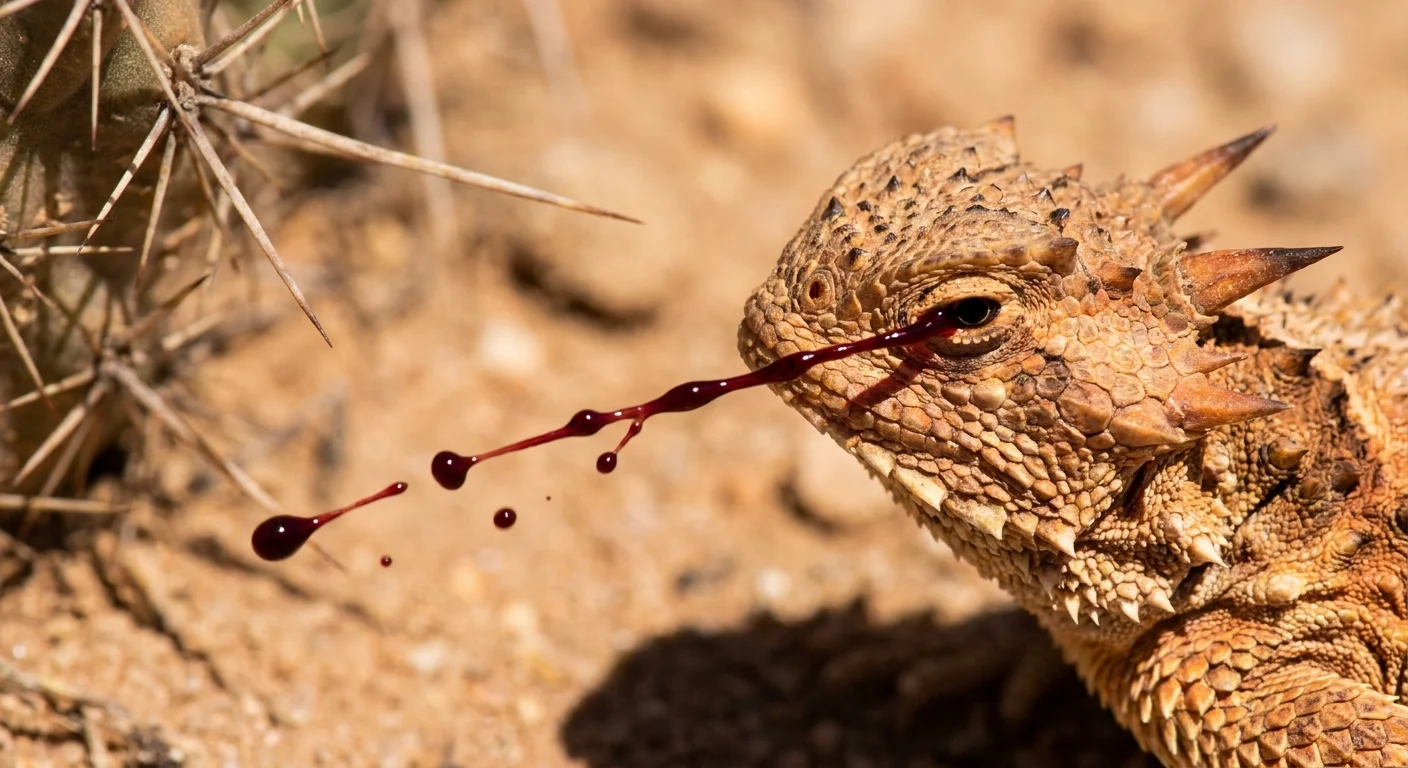
The Texas horned lizard shoots a targeted stream of blood directly from its eyes to escape death. When threatened by a coyote or bobcat, this desert reptile restricts the blood flow leaving its head. Vascular pressure builds rapidly until tiny vessels in the corners of its eyes completely rupture, launching a noxious stream of blood up to five feet away. This blood contains foul-tasting chemicals gathered from the lizard’s ant-heavy diet, forcing disgusted predators to retreat immediately. You can find detailed anatomical studies of this spectacular ocular defense in the National Geographic archives, proving that survival sometimes requires shocking biological sacrifices.

2. The Hagfish and Its Expanding Slime Trap
When a shark bites a deep-sea hagfish, the attacker suddenly chokes on an expanding cloud of impenetrable goo. Hagfish secrete specialized mucins and tightly coiled protein threads that expand up to ten thousand times their original size in mere milliseconds upon touching seawater. This astonishing, rapidly expanding slime clogs the predator’s gills, forcing it to release the hagfish to avoid suffocation. Researchers studying these weird animal facts note how the hagfish survives virtually unchanged for millions of years, relying entirely on a biochemical trap that deploys faster than a shark can bite down.
3. The Hairy Frog and Its Breakable Bone Claws
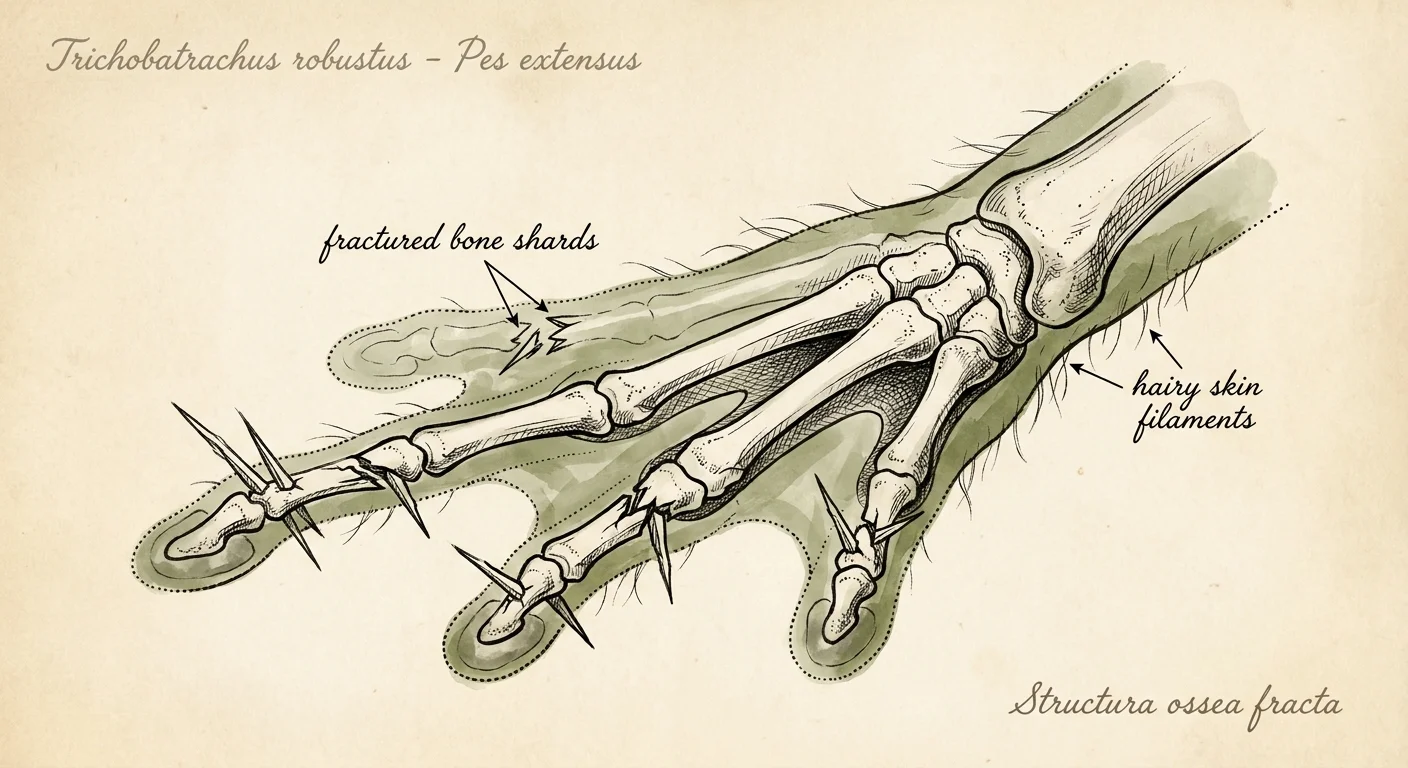
The hairy frog possesses a brutally effective biological weapon that resembles a comic book mutation. Native to Central Africa, this amphibian actively breaks its own toe bones when aggressively cornered. The fractured bone shards push through the frog’s toe pads, transforming soft, sensitive skin into a set of jagged, bony claws. Once the immediate threat passes, the damaged tissue heals and the bones retract back into the foot. Biologists studying bizarre animal defenses constantly marvel at the hairy frog’s extreme pain tolerance and rapid regenerative capabilities, demonstrating how aggressively life protects itself from consumption.
4. The Sea Cucumber and Its Eviscerated Organs
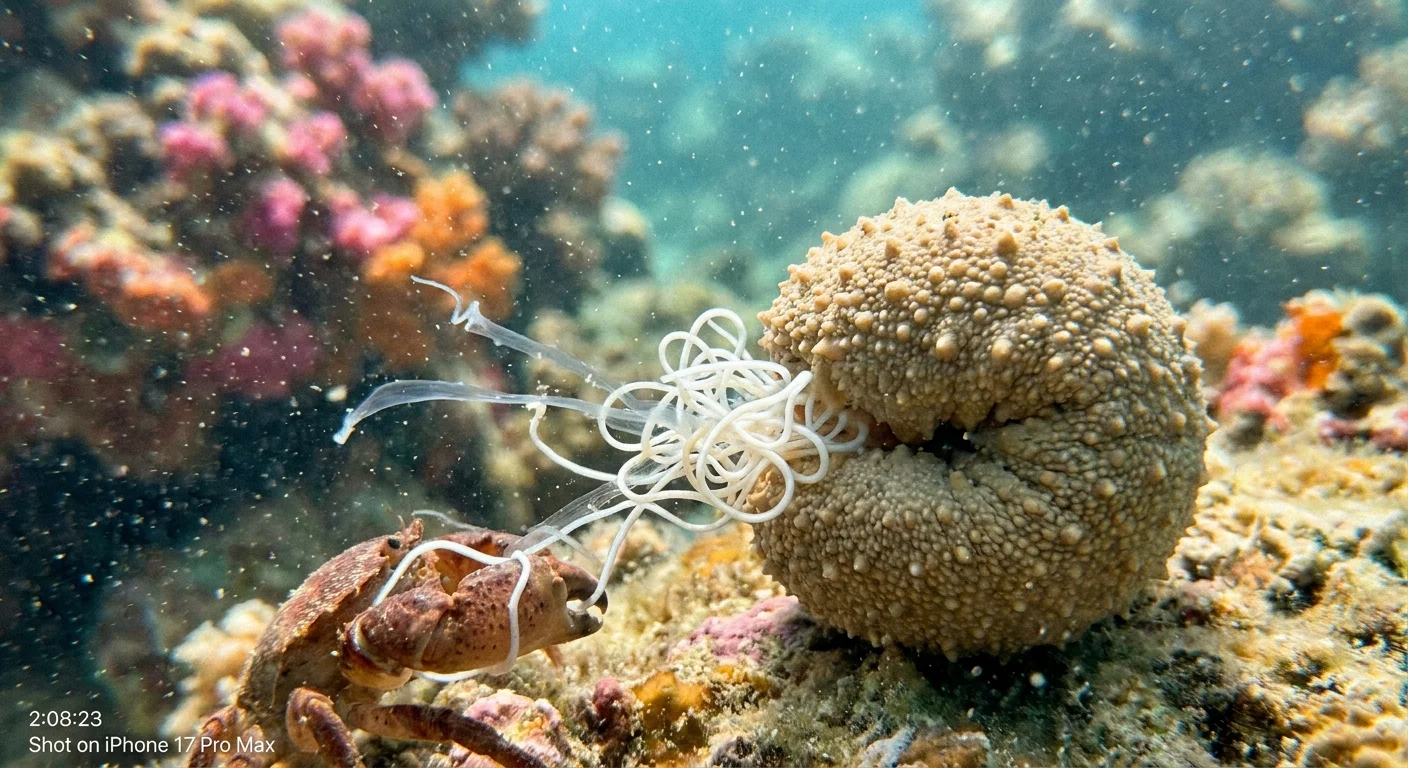
A slow-moving sea cucumber cannot outswim a hungry crab, so it relies on a grotesque diversion known as evisceration. Through violent muscular contractions, the creature forcefully expels its respiratory trees and entire digestive tract out of its anus. These sticky, highly toxic structures quickly entangle the predator, allowing the sea cucumber to crawl safely away. These resilient invertebrates simply regrow their missing entrails over a span of several weeks. You can explore the fascinating mechanics of echinoderm tissue regeneration through detailed scientific resources provided by the Smithsonian Ocean Portal.
5. The Bombardier Beetle and Its Chemical Artillery
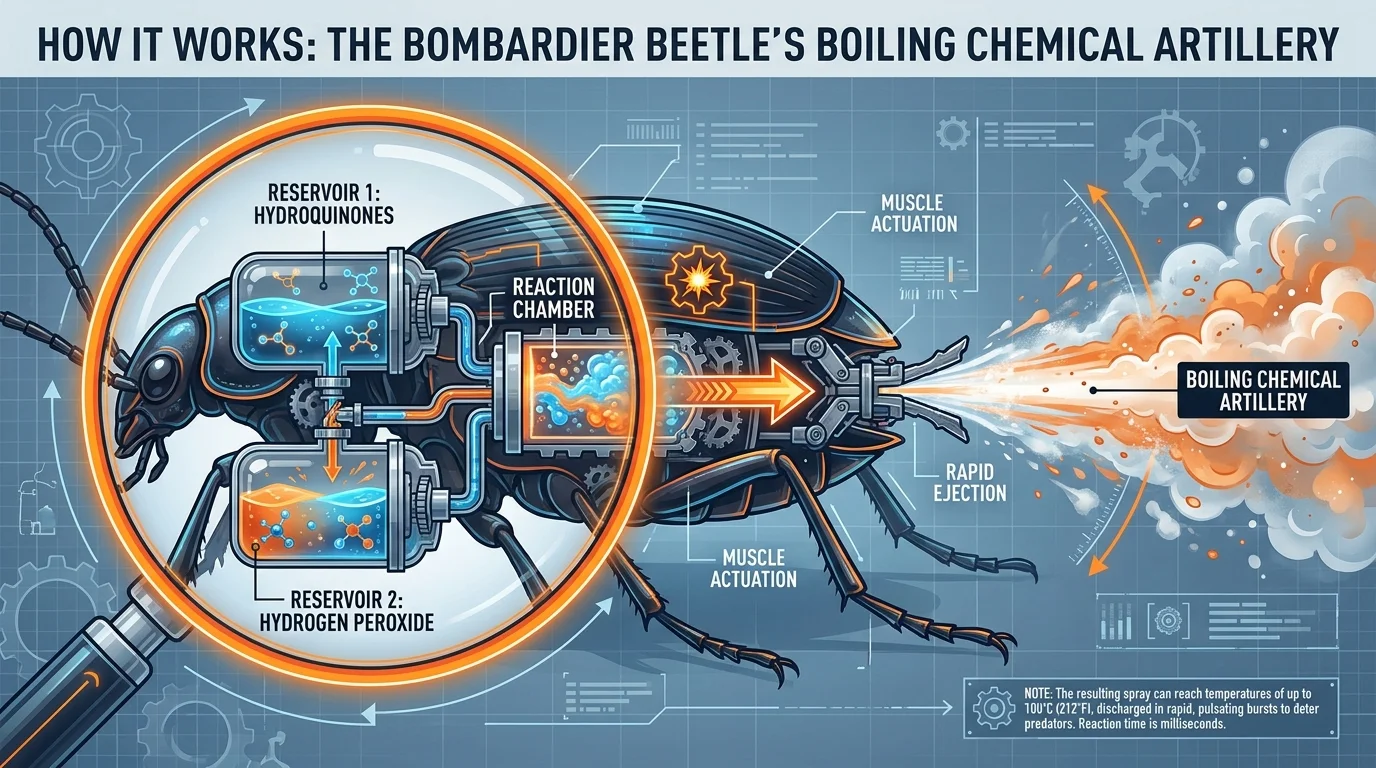
The bombardier beetle turns its abdomen into an active combustion chamber to survive insectivorous birds and toads. It safely stores hydroquinone and hydrogen peroxide in two separate internal reservoirs. When approached by a predator, the insect pushes these chemicals into a hardened mixing chamber filled with specialized catalysts and enzymes. The resulting violent reaction generates extreme heat—nearly reaching the boiling point of water—and creates immense internal pressure. The insect forcefully expels the highly toxic, scalding liquid from its rear with a loud, audible pop. You will find that this high-velocity chemical artillery deters nearly all attackers.
6. The Exploding Ants of Borneo
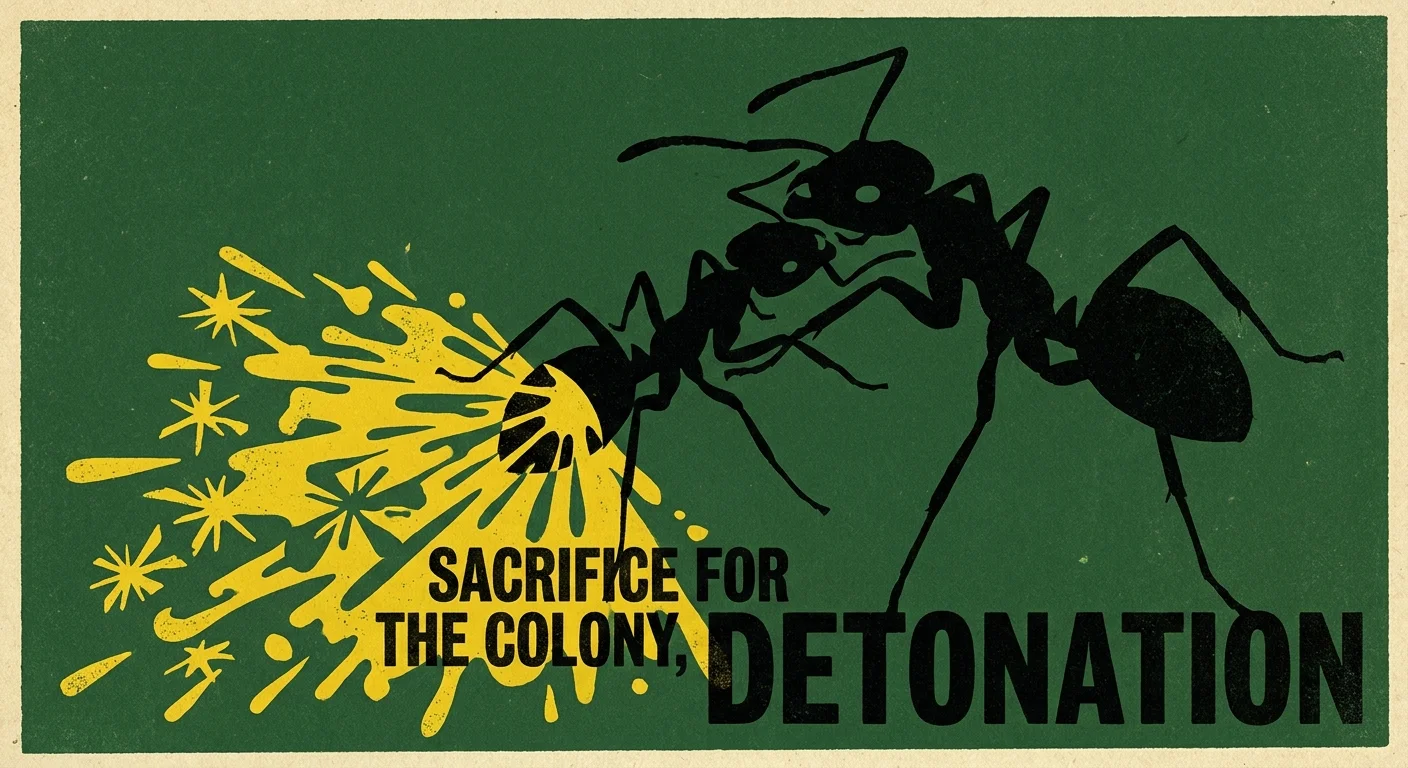
In the dense forests of Borneo, worker ants of the species Colobopsis saundersi engage in the ultimate act of self-sacrifice. When completely overpowered by a rival insect or spider, the ant violently contracts its abdominal muscles until its internal organs completely rupture. This fatal detonation sprays a sticky, corrosive yellow venom in all directions, trapping and killing the enemy alongside the defender. Entomologists accurately categorize these mind blowing animal facts under suicidal altruism. The colony sacrifices a single worker to preserve the reproductive queens, proving the collective matters far more than the individual in the insect world.
7. The African Crested Rat and Its Poisonous Fur
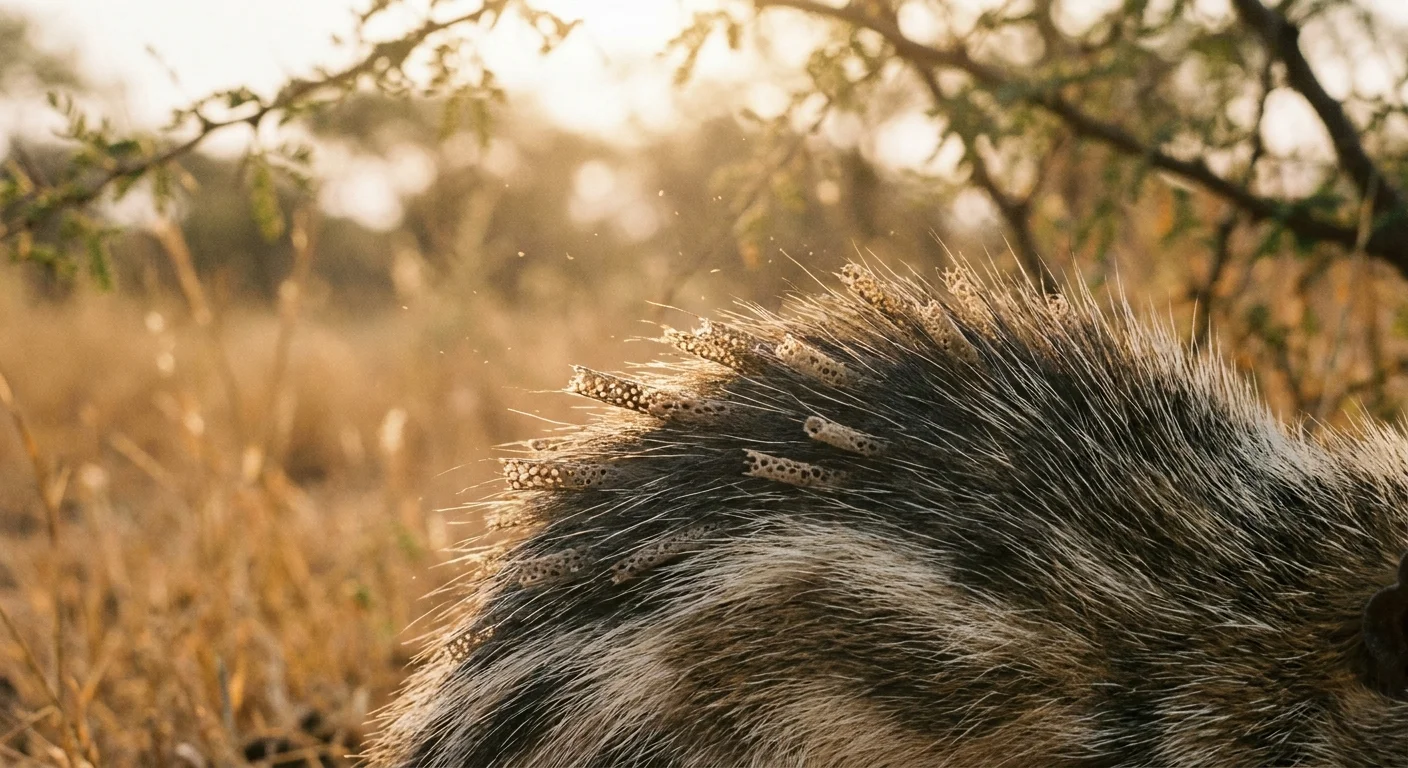
The African crested rat cleverly outsources its deadly defense mechanism. This large rodent actively searches for the Acokanthera schimperi tree—the exact plant human hunters use to brew poison for arrows. The rat chews the highly toxic bark and slathers the resulting poisonous saliva across specialized, porous hairs along its flanks. When a wild dog or larger predator bites the rat, the hollow hairs immediately inject a lethal dose of cardiotoxins. According to peer-reviewed research published in the Journal of Mammalogy, the rat effortlessly weaponizes botanical poisons without suffering any ill physiological effects itself.
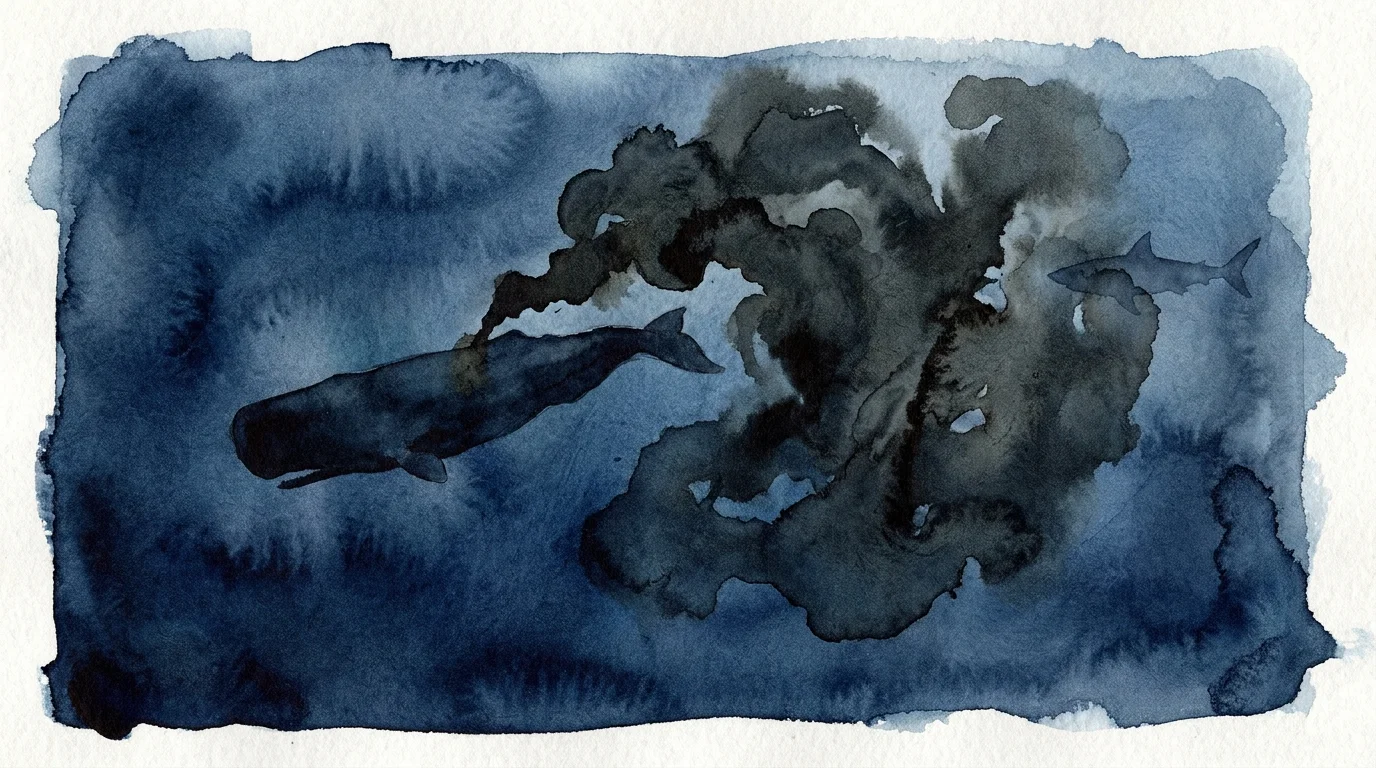
8. The Pygmy Sperm Whale and Its Intestinal Ink
The pygmy sperm whale evolved a highly effective aquatic smokescreen to rival any giant squid. Lacking the immense speed of dolphins, this smaller marine mammal stores a reddish-brown fluid in a massively enlarged sac attached to its lower intestines. When frightened by a predator, the whale releases several gallons of this dense intestinal syrup directly into the water. It immediately thrashes its tail, churning the fluid into a massive, murky cloud that visually blinds and chemically disorients attackers while the clever whale silently escapes into the darker ocean depths.
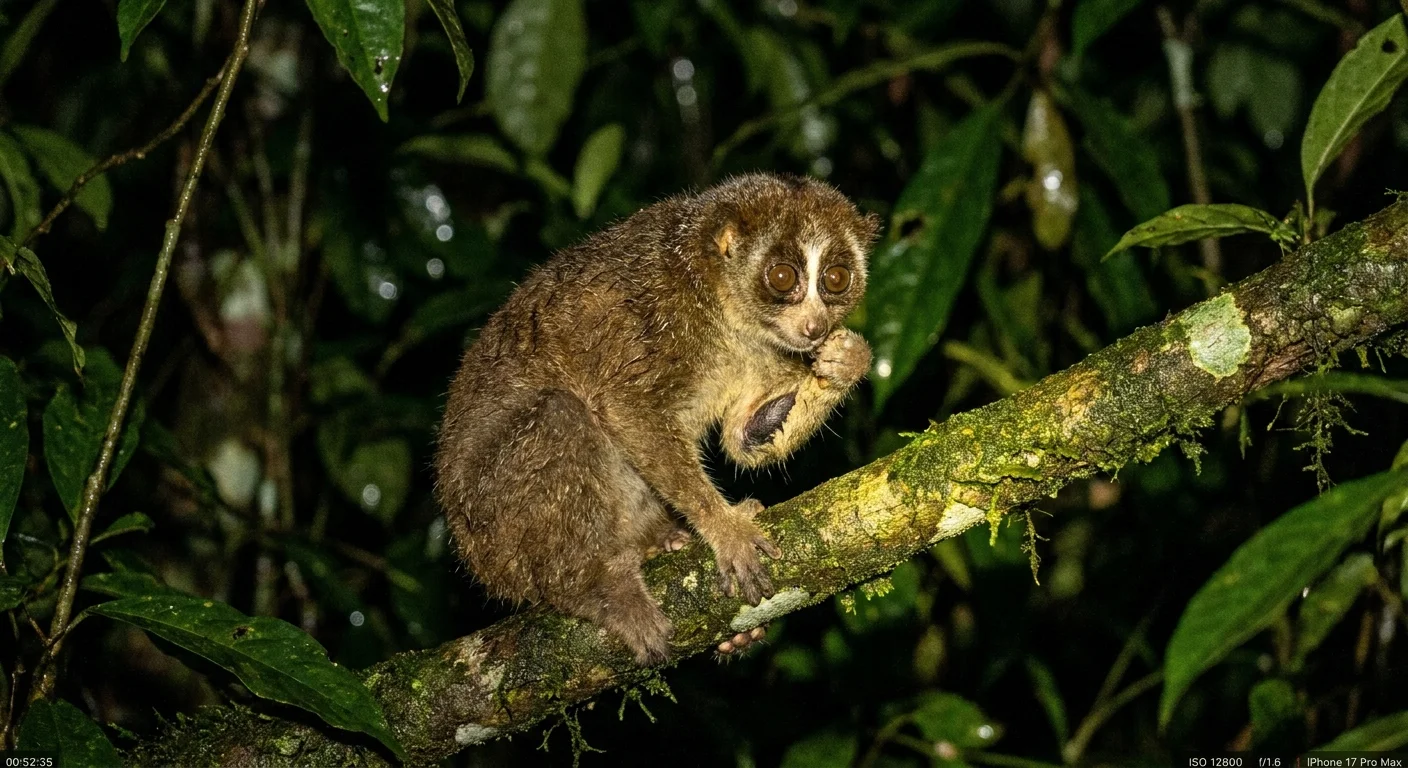
9. The Slow Loris and Its Toxic Elbows
Behind the cuddly exterior and massive eyes of the slow loris hides a deeply deceptive danger; it rightfully ranks as the only venomous primate on Earth. This nocturnal creature secretes a foul-smelling oil from a brachial gland located on its inner arm. By actively licking the gland, the loris mixes the oil with its saliva to activate a remarkably potent, flesh-rotting venom. A single bite triggers severe anaphylactic shock in predators. You can investigate this unique primate defense mechanism by reviewing extensive field reports from the Duke Lemur Center.
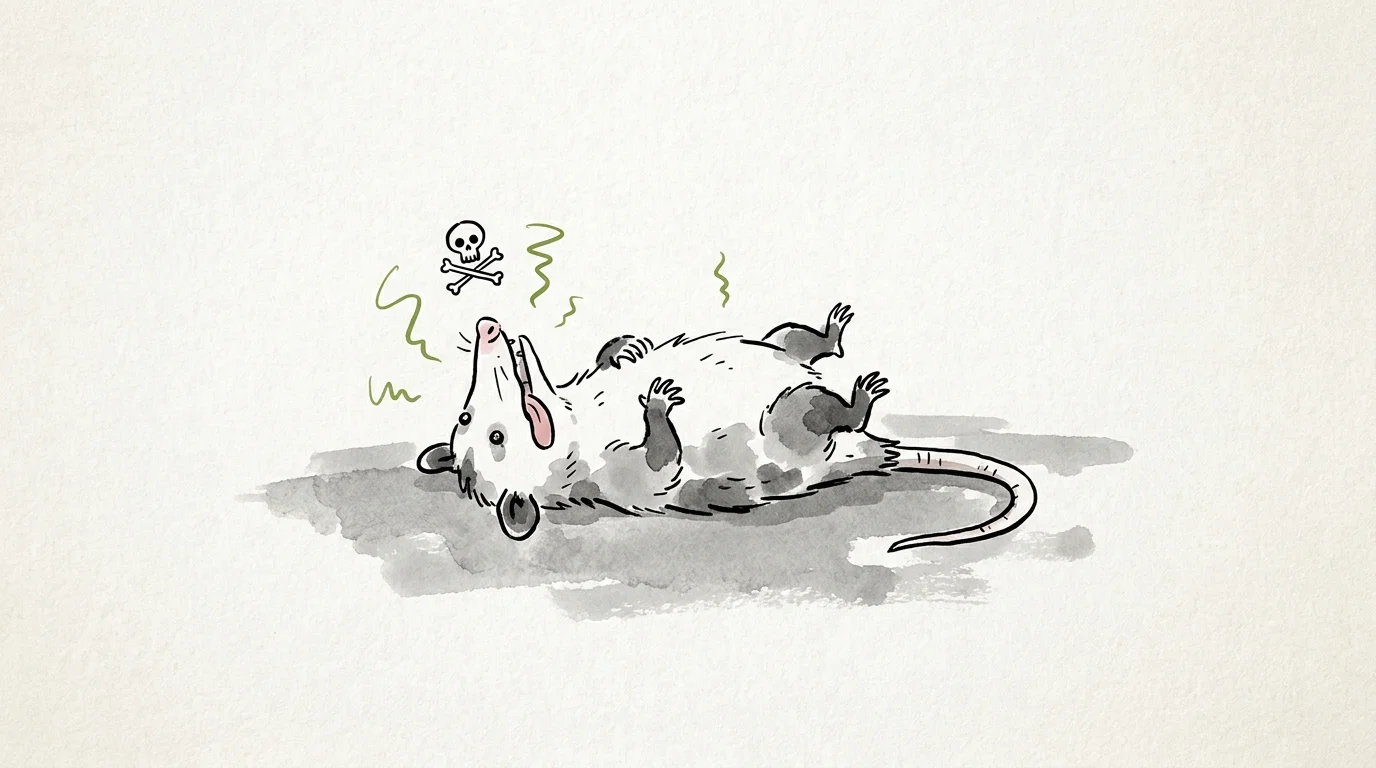
10. The Opossum and Its Putrid Coma
The Virginia opossum executes an involuntary, highly complex biological performance known as thanatosis. When faced with an overwhelming, immediate threat, the opossum falls into a deep, shock-induced coma. Its heart rate plummets to a near halt, its core body temperature drops, and its tongue lolls out of its gaping mouth. To finalize the gruesome visual illusion, its anal glands secrete a putrid green fluid that perfectly mimics the sharp odor of decaying flesh. Predators hardwired to hunt live, healthy prey quickly lose interest. The opossum revives completely unharmed hours later, surviving simply through temporary death.
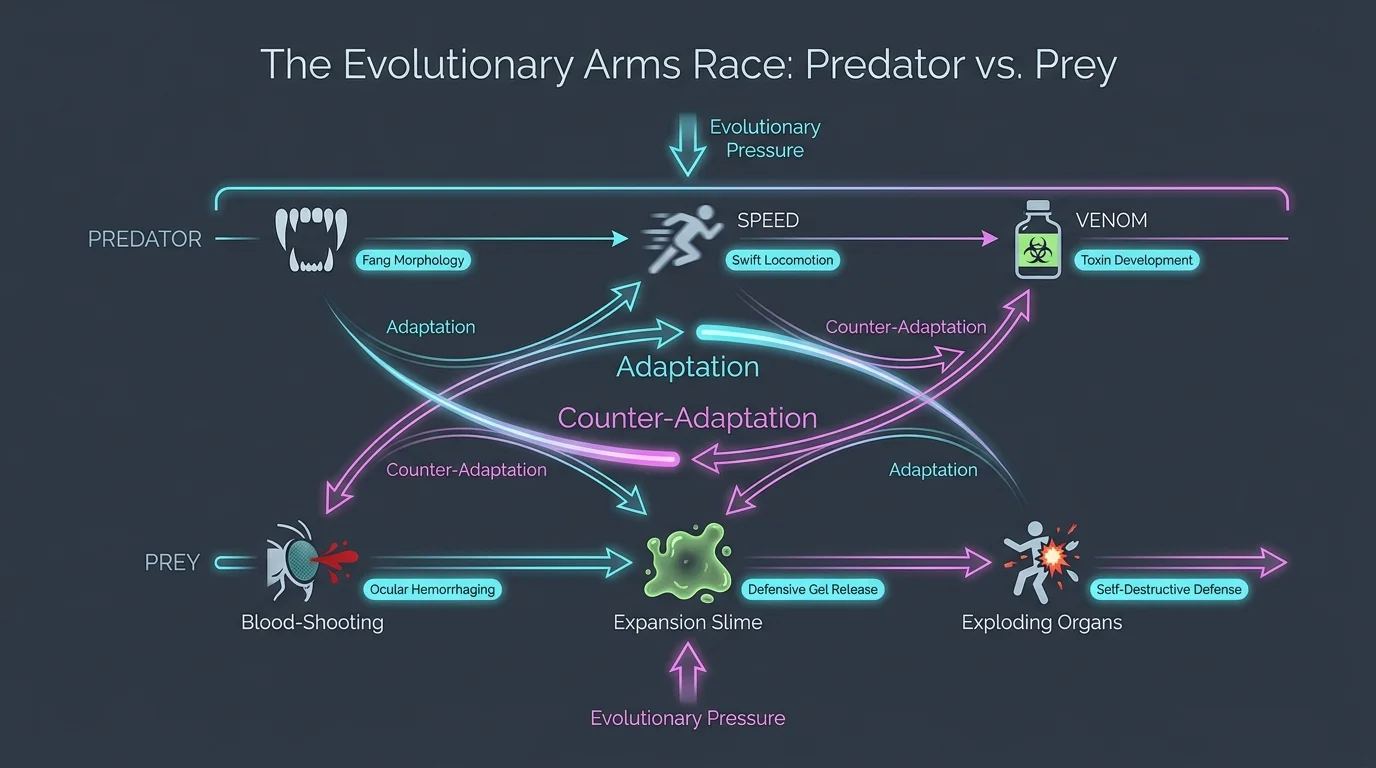
Meaning and Context: The Evolutionary Arms Race
To accurately understand how bizarre animal defenses develop, you must look directly at the brutal, unyielding dynamics of the evolutionary arms race. Predators constantly evolve stronger jaws, faster sprinting speeds, and sharper senses. In direct response, prey species must adapt quickly or face total extinction. This relentless biological pressure forces animals to explore extreme genetic pathways. Divergent evolution drives creatures to repurpose existing body parts into unimaginable defensive tools—like a tiny frog turning toe bones into defensive claws or a common beetle transforming its digestive tract into an active combustion chamber.
Nature operates strictly on a ruthless cost-benefit analysis. Spending the immense biological energy required to regrow internal organs only makes sense if the payoff prevents a species from being eaten today. When you observe strange animal behaviors, you witness the successful culmination of millions of years of genetic trial and error. The animals featured here survive primarily because their ancestors stumbled upon rare genetic mutations that provided a distinct, life-saving advantage. These incredible animal survival mechanisms prove that evolution consistently rewards whatever weird, unexpected strategy keeps an organism alive long enough to successfully reproduce.
Everyday Impact: Biomimicry and Human Engineering
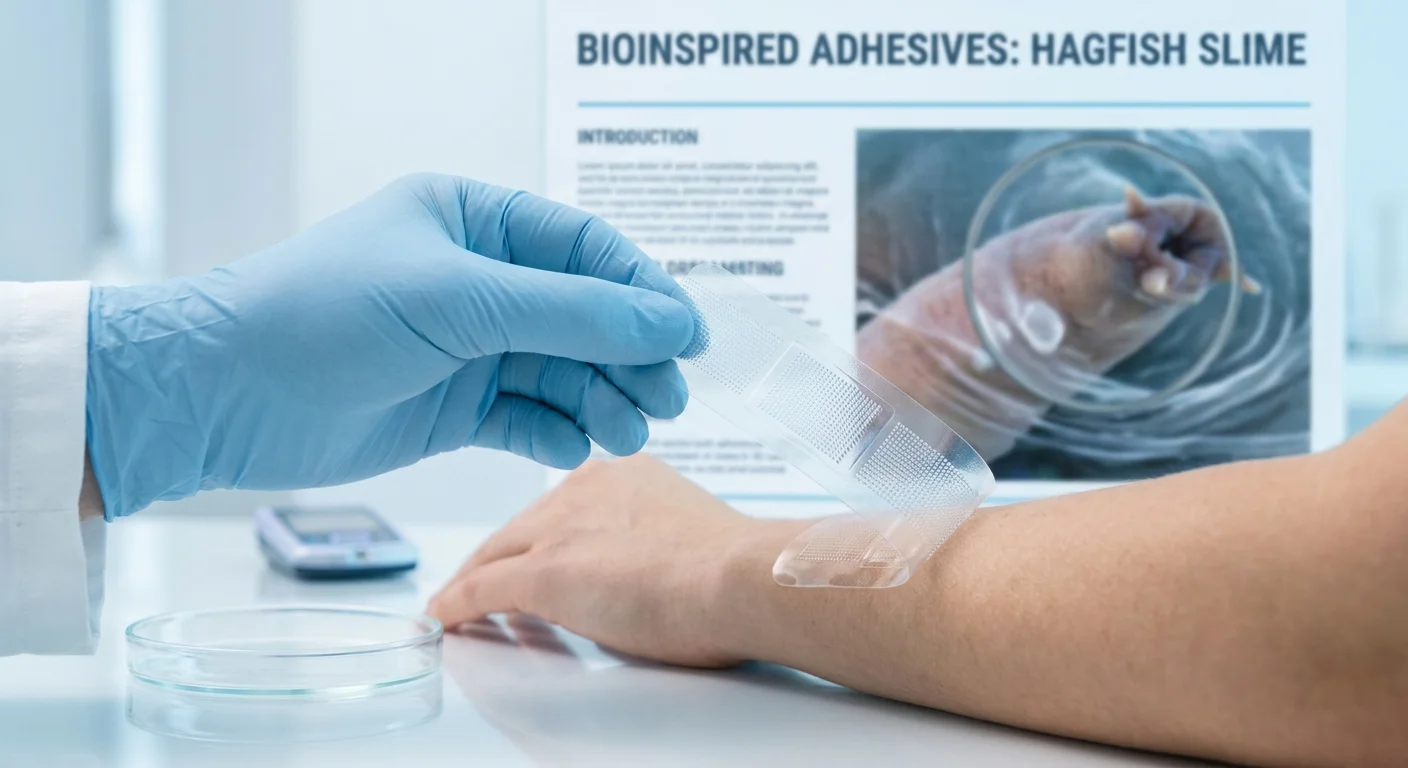
You might wonder how exploding ants and slime-producing fish apply to your daily life, but human engineering consistently borrows from these mind blowing animal facts through a scientific practice called biomimicry. When you study the deep-sea hagfish, you actively unlock crucial secrets to next-generation materials. Engineers currently analyze and synthesize hagfish slime proteins to develop incredibly strong, eco-friendly bioplastics and advanced firefighting foams that expand instantly to smother chemical flames.
Similarly, researchers studying the bombardier beetle’s internal combustion chamber utilize those exact geometric principles to design highly efficient fuel injection systems for modern aircraft engines and sophisticated medical inhalers that deliver precise doses of liquid medication. The impressive regenerative capabilities of the sea cucumber also actively inform modern medical research. By mapping precisely how echinoderms seamlessly rebuild their digestive tracts from scratch, geneticists hope to unlock revolutionary new treatments for human tissue repair and scar-free wound healing. Your modern technological conveniences often start as desperate survival strategies out in the wild. Recognizing the distinct value of animal survival mechanisms ensures we aggressively protect these species for the profound scientific breakthroughs they continually offer humanity.
Frequently Asked Questions About Animal Defenses
Do animals feel pain when they use self-destructive defenses?
Biologists strongly believe that animals like the hairy frog do experience pain when forcefully breaking their own bones, but the intense, sudden rush of adrenaline temporarily overrides the physical sensation during a life-or-death struggle. The temporary discomfort of a fractured toe bone always remains a significantly better evolutionary alternative to being captured and eaten.
Can human interventions disrupt these strange animal behaviors?
Yes, widespread habitat destruction severely disrupts complex animal survival mechanisms. If an African crested rat cannot naturally find the specific toxic tree it needs to poison its fur due to massive deforestation, it instantly loses its primary defense mechanism. Protecting native ecosystems directly guarantees these unique species maintain their critical evolutionary edge.
How long does it take for a sea cucumber to regenerate its organs?
After a sea cucumber safely eviscerates its internal structures, the full regeneration process typically takes anywhere from two to five weeks, depending heavily on the specific species and the surrounding water temperature. During this highly vulnerable recovery window, the compromised creature relies entirely on camouflage and successfully hiding deep within rock crevices.
Are these bizarre animal defenses dangerous to humans?
Many of these strange animal behaviors absolutely pose legitimate physical risks to careless humans. The potent venom of a slow loris regularly induces severe allergic reactions and potential anaphylactic shock. Likewise, the bombardier beetle’s boiling chemical spray easily causes extremely painful skin burns. You should always observe wild animals from a respectful, safe distance to avoid accidentally triggering their defensive adaptations.
Keep Exploring the Wild World of Biology
The natural world operates with a stunning level of ingenuity that constantly challenges our basic understanding of life. Bizarre animal defenses prove definitively that biological reality genuinely surpasses human fiction. From the blood-shooting eyes of desert horned lizards to the venomous elbows of wide-eyed slow lorises, these adaptations highlight the brutal, beautiful brilliance of evolution. You hold the direct power to protect these incredible species by actively supporting local conservation efforts and staying informed about habitat loss. Share these weird animal facts with fellow nature enthusiasts, and keep aggressively expanding your knowledge through verified scientific literature. When you dive deeper into biology, you discover a dynamic planet bursting with relentless, awe-inspiring resilience.