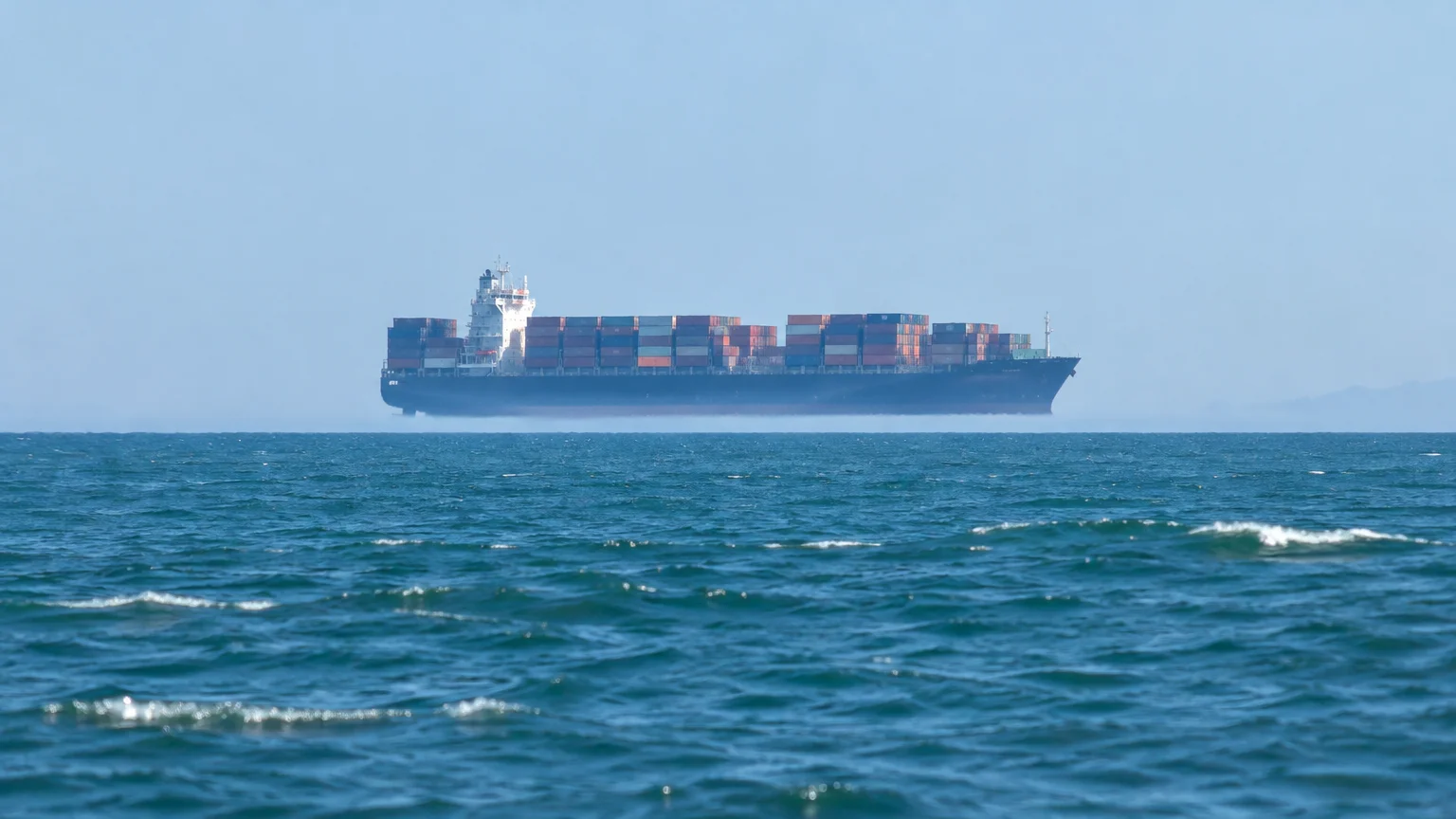
You look out across the ocean and spot a massive cargo ship hovering in the sky. The vessel glides above the water, leaving miles of open blue between its hull and the waves.
This bizarre sight is not a camera trick or an alien visitor. It is a rare optical illusion known as a Fata Morgana, caused by bent rays of light.
When warm air blankets cold ocean water, your eyes receive light from strange angles. The resulting mirage lifts distant objects into the sky and turns everyday physics into pure magic.
In This Briefing07 Sections ▾
Modern Sightings That Baffled Beachgoers
In March 2026, visitors walking along Virginia Beach watched giant tankers float high above the horizon. The striking scene looked like science fiction, yet hundreds of people saw it in broad daylight.
Local reporters at 13News Now confirmed that warm spring air had crossed chilly coastal waters. That steep temperature contrast produced an intense superior mirage just off the coast.
A similar event captured global attention in early 2021 off Cornwall, England. Walker David Morris photographed a massive tanker floating cleanly above the sea near Falmouth.
Days earlier, another walker photographed a hovering vessel off Banff in Aberdeenshire, Scotland. Both images went viral as people argued over digital editing tricks.
Forecasters at the UK Met Office confirmed the phenomenon as a genuine Fata Morgana. Cold ocean water had bent the incoming light into an extraordinary visual display.
Similar scenes appeared in late 2025 across South America. Between September and November 2025, observers in Argentina watched ships hover over the Río de la Plata.
How Thermal Inversions Bend Light Rays
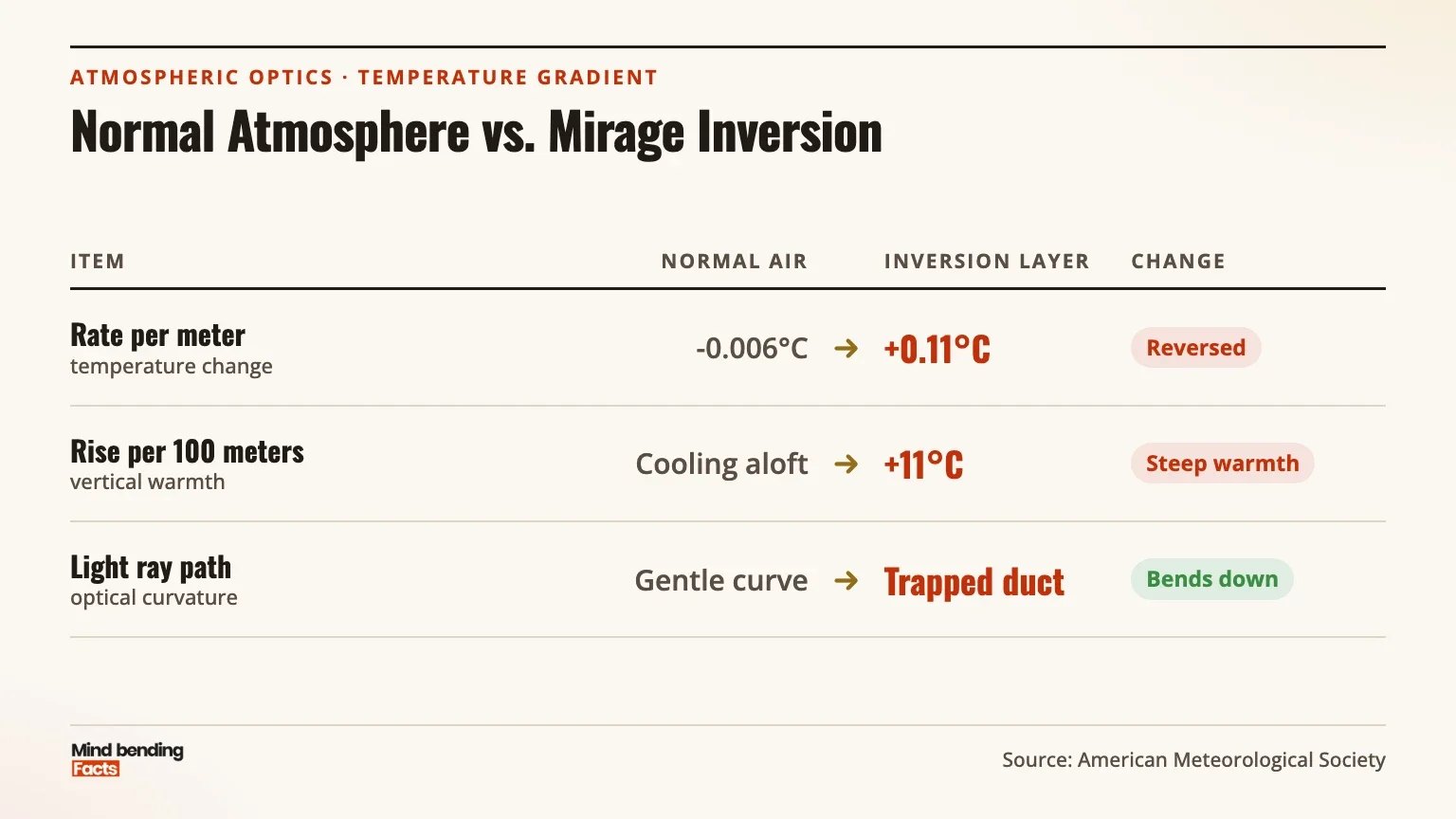
Under standard conditions, air temperature drops as you climb higher above the ground. Air cools by about 0.006 degrees Celsius for every meter of altitude.
In that normal state, light rays bend slightly, with a curvature six times wider than our planet. You simply see ships sitting directly on the surface of the water.
A Fata Morgana requires a strong temperature inversion, where warm air settles over chilled ocean surface water. This creates an upside-down temperature pattern near the ground.
The vertical temperature increase must exceed roughly 0.11 degrees Celsius per meter, or 11 degrees per 100 meters. That steep gradient bends light downward faster than Earth curves.
This sharp bending creates an atmospheric duct that acts like a natural fiber-optic cable. Light from the distant vessel gets trapped inside this dense lower channel.
Your brain always assumes that light travels in straight lines. When those curved rays enter your eyes, you project the ship high into the open sky.
The American Meteorological Society classifies a Fata Morgana as a complex superior mirage. It requires more than three stacked images that alternate between upright and inverted positions.
As wind shifts these thermal layers, the image constantly morphs. Distant objects stretch vertically into towering shapes or seem to detach from the horizon entirely.
Phantom Continents and Ghost Ship Legends
People have observed these ocean illusions for hundreds of years. The phenomenon takes its name from Italian folklore and the legendary sorceress Morgan le Fay.
Italian chronicler Marc’Antonio Politi recorded the name Fata Morgana in 1617 over the Strait of Messina. Sailors believed the sorceress conjured floating castles to lure them into danger.
Scholar Athanasius Kircher examined these mirages in 1646, while naturalist Antonio Minasi published the first systematic treatise in 1773. The name officially entered the English language in 1818.
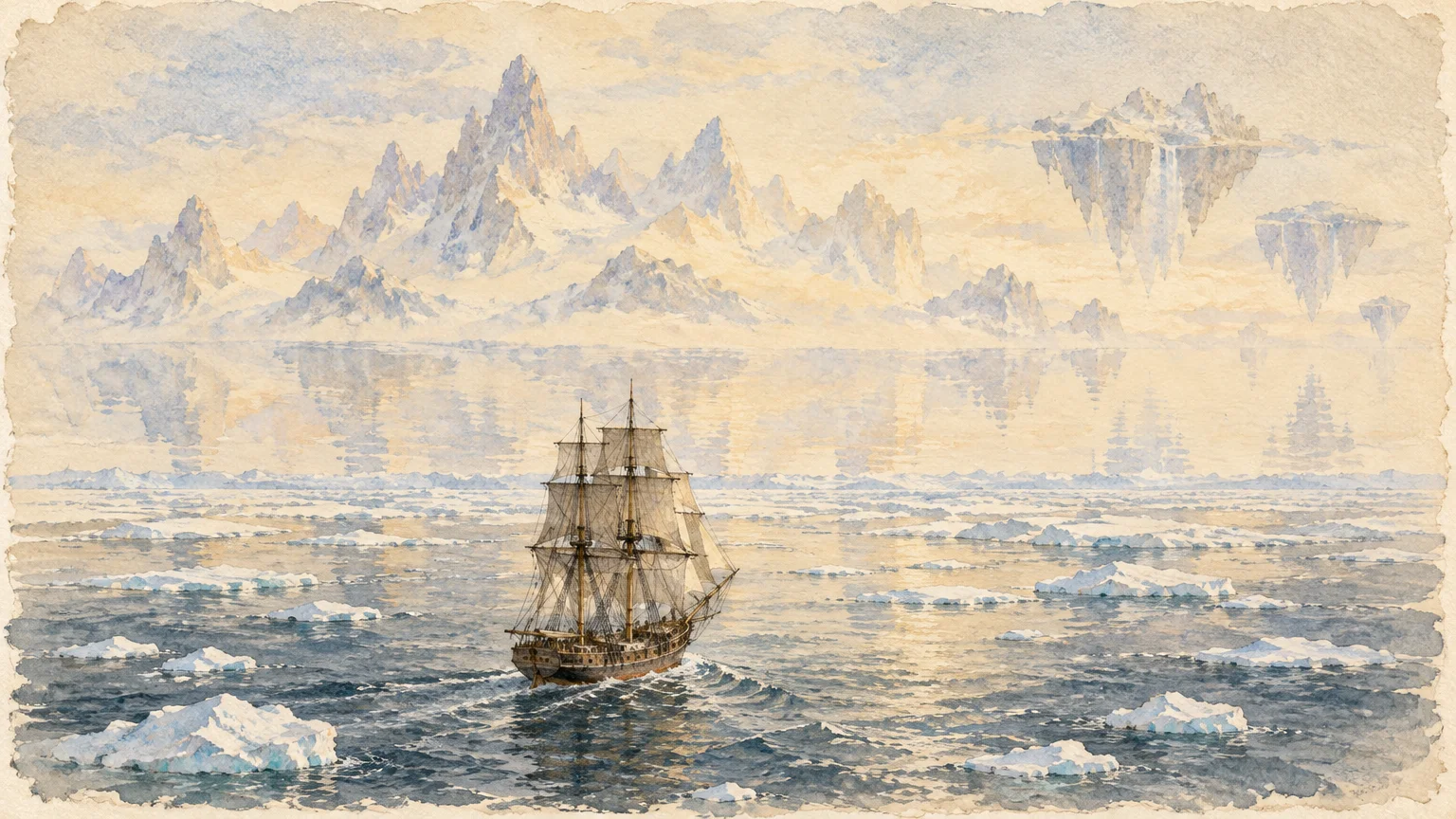
That same year, British explorer Sir John Ross sailed into Lancaster Sound searching for the Northwest Passage. He saw towering peaks blocking his path and named them the Croker Mountains.
Ross turned back, but explorer William Edward Parry sailed through the exact same spot in 1819. Parry found open water, proving the mountain range was an optical illusion.
In 1906, explorer Robert Peary reported a massive Arctic continent named Crocker Land, 130 miles northwest of Cape Thomas Hubbard. He insisted he saw vast peaks across the frozen horizon.
Donald Baxter MacMillan led an expedition to find Crocker Land between 1913 and 1917. Sledging across the ice in March 1914, his team proved the continent was only a mirage.
Experts at the Australian Bureau of Meteorology note that these illusions also explain ghost ship tales. Mirages likely inspired 17th-century sightings of the legendary Flying Dutchman.
The Titanic and Invisible Radar Targets
Thermal inversions can also create serious maritime hazards. In 2012, historian Tim Maltin published research suggesting a cold-water mirage contributed to the sinking of the RMS Titanic.
On April 14, 1912, the freezing Labrador Current crossed paths with the warmer Gulf Stream. This created an intense inversion right along the liner’s path.
The resulting mirage created an elevated false horizon that masked the iceberg from lookouts. It also distorted light signals between the Titanic and the nearby ship Californian.
These atmospheric ducts bend more than visible light. The same thermal layers can also trap VHF, UHF, and radar waves inside low-altitude atmospheric channels.
Trapped signals produce false radar targets far beyond normal detection limits. Radar operators might detect ghost objects hundreds of miles away that do not physically exist.
Official French aviation and UFO investigations confirm that atmospheric ducting explains many unexplained radar sightings. Bent waves create phantom echoes that mirror visual Fata Morgana illusions.

How You Can Spot a Fata Morgana Yourself
You do not need to visit polar seas to see this spectacle. You can watch for them along ocean beaches and large lakes during seasonal temperature changes.
Late spring and early summer offer your best chances of spotting one. During these months, warm continental air frequently blows across chilled surface water.
Choose calm, sunny days with very light wind. Strong breezes churn the atmosphere and destroy the sharp temperature boundary required for ducting.
Scan flat, wide waters like ocean bays or the Great Lakes. You need miles of open water between your vantage point and distant ships.
Pack binoculars or a camera with a telephoto zoom lens. A Fata Morgana occupies a narrow optical band resting right above the horizon line.
Through magnification, you can spot ships floating in mid-air. You will often see inverted hulls stacked right on top of real vessels.
Frequently Asked Questions
What is the difference between an inferior mirage and a Fata Morgana?
An inferior mirage forms over hot ground, like sunlit asphalt in summer. Light bends upward toward cooler air, creating false puddles of water below your line of sight.
A Fata Morgana forms when cold air sits beneath warmer air aloft. Light bends downward, lifting distant objects above their real positions in stacked, distorted layers.
Can you see a Fata Morgana over land?
Yes, you can see them over frozen plains, snow-covered valleys, or deserts on cold mornings. Any flat surface with a strong inversion can create the effect.
Large bodies of water remain the most common location. Calm seas provide the vast, undisturbed distances needed for atmospheric ducts to guide light cleanly.
Why does the hovering image change shape so quickly?
Air layers over water remain in constant thermal motion. As tiny drafts compress and stretch the inversion layer, the optical lens rapidly alters its shape.
These subtle changes cause distant ships to stretch into towers or collapse within minutes. The mirage looks alive because the atmosphere never stays completely still.
Can cameras photograph a Fata Morgana?
Yes, cameras easily record a Fata Morgana because the illusion is real physics. Light rays genuinely bend through the air before reaching your camera sensor.
This mirage is an optical event rather than a mental hallucination. Any camera lens will capture the exact same floating image that your eyes see.
Keep Your Eyes on the Horizon
The next time you visit the coast on a warm spring day, watch the water carefully. You might catch a container ship gliding peacefully above the ocean surface.
Understanding atmospheric optics does not diminish the wonder of the scene. Instead, it proves that nature can create jaw-dropping optical illusions using simple air and light.
Check out atmospheric studies from the National Oceanic and Atmospheric Administration to learn more about weather physics. Share this surprising fact with fellow beachgoers on your next trip.