
Human history contains stories so baffling they outshine even the wildest works of speculative fiction. You likely spent your school years memorizing treaties, trade routes, and the names of stoic monarchs, but textbooks often skip the moments where reality completely breaks character. When you dig into bizarre history facts, you discover a spectacular gallery of human blunders, unusual weather phenomena, and downright absurd animal encounters. These surprising past stories serve as a powerful reminder that the world operates on chaos just as much as it does on orderly timelines. Prepare to adjust your understanding of reality as you explore eleven fully documented events that defy basic logic.
The Evidence Trail: Documenting Surprising Past Stories
1. The Great Emu War of 1932
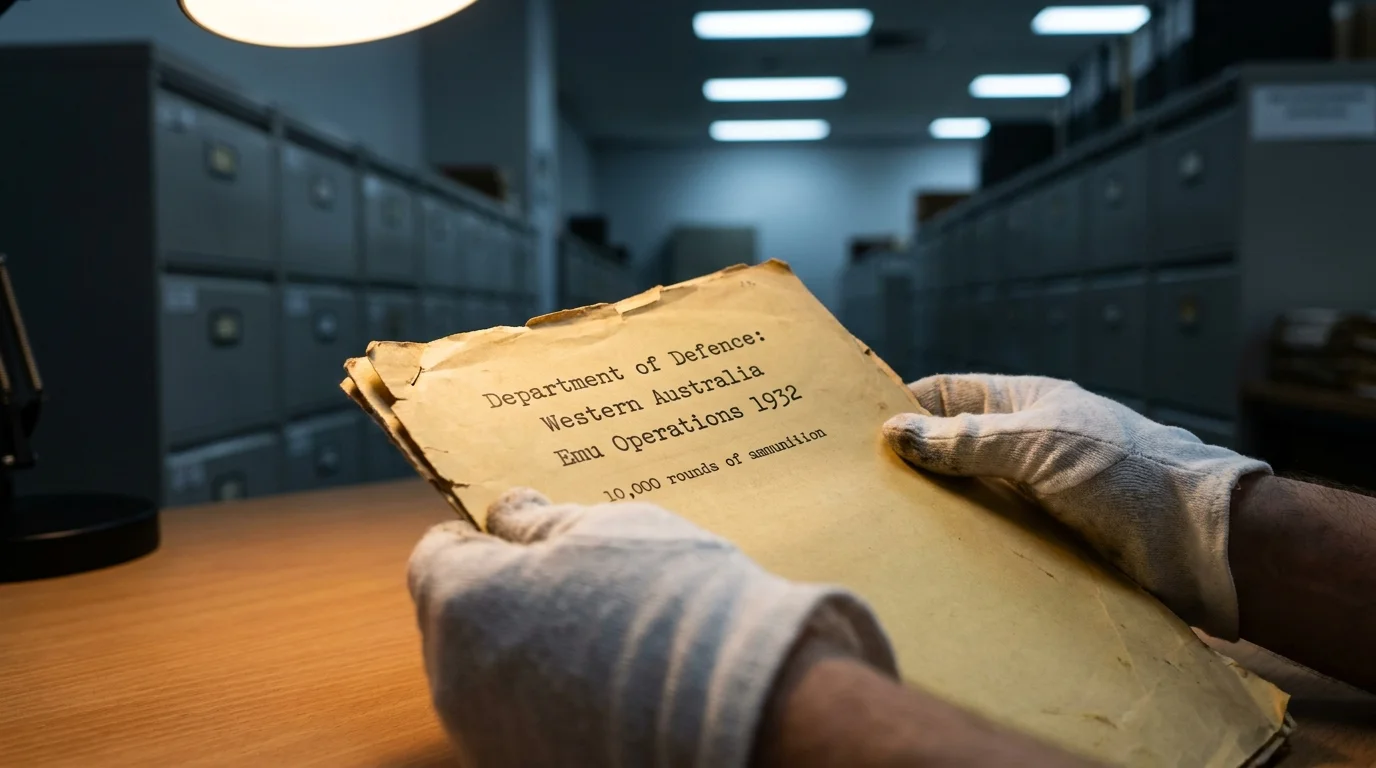
In 1932, the Australian military declared war on birds—and lost. Facing a massive population of emus destroying wheat crops in Western Australia, the government deployed soldiers armed with Lewis machine guns and 10,000 rounds of ammunition. You might expect a swift military victory; instead, the flightless birds scattered, making them impossible targets. After weeks of humiliating defeat and barely any dent in the emu population, the military withdrew. You can review the official records at the National Museum of Australia, which perfectly documents this bizarre human-wildlife conflict.
2. The Dancing Plague of 1518
Strasbourg witnessed a terrifying phenomenon in July 1518 when a woman named Frau Troffea stepped into the street and began dancing fervently. Within weeks, approximately 400 people joined her in a compulsive, unbreakable trance. This strange historical event persisted until dozens of citizens collapsed and perished from sheer exhaustion or heart attacks. Modern physicians heavily debated by National Geographic attribute the outbreak to mass psychogenic illness triggered by extreme famine and distress, though some suspect ergot poisoning from moldy rye bread. Regardless of the exact trigger, the agonizing spectacle remains a heavily documented historical fact.
3. The Great Molasses Flood of 1919
The weird history USA archives hold few stories as devastating and absurd as the Great Molasses Flood of 1919, extensively researched by Smithsonian Magazine. On a seemingly normal January day in Boston, a gigantic storage tank ruptured, releasing 2.3 million gallons of sticky, dark molasses. The incredibly dense liquid formed a towering wave moving at 35 miles per hour, completely flattening buildings and sweeping away everything in its path. The disaster claimed 21 lives and injured 150 others. Today, structural engineers point to wildly inadequate steel thickness and rapidly fluctuating temperatures as the direct culprits behind this massive industrial failure.
4. The Kentucky Meat Shower of 1876
Imagine stepping outside to feel raindrops, only to realize the sky is raining chunks of raw meat. In 1876, the residents of Olympia Springs, Kentucky, experienced exactly this terrifying anomaly. Two local men bravely tasted the airborne flesh, determining it resembled mutton or venison. Scientists and historians vigorously debated the phenomenon until consensus emerged: a large flock of vultures likely gorged themselves on dead horses before taking flight, simultaneously regurgitating their meals mid-air when startled. You can dive deeper into this unbelievable true event through archives maintained by Scientific American.
5. The 1904 Olympic Marathon
The marathon at the 1904 St. Louis Olympics devolved into absolute chaos, producing the most unbelievable true events in sports history. The race took place on severely dusty dirt roads, forcing runners to inhale thick clouds of debris that practically destroyed their respiratory systems. One competitor hitched a ride in a car for 11 miles before judges caught him. The actual winner, Thomas Hicks, received multiple doses of rat poison mixed with brandy from his trainers just to keep his legs moving. Meanwhile, another runner lost significant time when a pack of wild dogs chased him an entire mile off the designated course.
6. The Pig War of 1859
The United States and Great Britain almost launched a full-scale military conflict in 1859 over a single dead pig. An American farmer living on the disputed San Juan Islands shot a British-owned swine that repeatedly raided his potato patch. The British threatened to arrest the farmer; the Americans immediately called in the military. Soon, warships lined the coast and hundreds of heavily armed soldiers stared each other down. For months, two massive empires stood on the brink of war over property damage. Ultimately, diplomatic leaders successfully intervened, ending the bloodless standoff without a single human casualty.
7. The London Beer Flood of 1814
You rarely associate beer with widespread municipal destruction, but Londoners in 1814 discovered the deadly potential of dark porter. A massive three-story-tall wooden fermentation vat inside the Meux and Company Brewery suddenly burst. The resulting chain reaction unleashed up to 320,000 gallons of fermenting beer into the cramped, impoverished neighborhood of St. Giles. The alcohol wave smashed through brick walls instantly and flooded basement dwellings. Eight people lost their lives in the deluge, and a presiding judge officially dismissed the catastrophic brewery explosion as an unavoidable act of God, absolving the brewery of all financial liability.
8. The Erfurt Latrine Disaster of 1184
Medieval royal gatherings carried immense prestige, but the 1184 Erfurt Latrine Disaster proved they also carried terrible structural risks. King Henry VI summoned dozens of prominent nobles to resolve a bitter land dispute inside the Petersburg Citadel. The overwhelming weight of the heavy armor and aristocratic attendees proved too much for the decaying wooden floorboards. The floor abruptly gave way, plunging the entire royal assembly down into the monastery’s massive, unemptied cesspool. Up to 60 nobles drowned in the unimaginable filth below, creating one of the most undignified and horrifying tragedies in European history.
9. The Liechtenstein Army Gains a Friend in 1866
Military deployments rarely feature heartwarming conclusions, making Liechtenstein’s 1866 campaign during the Austro-Prussian War a delightful historical anomaly. The tiny European principality dispatched an army of exactly 80 men to guard the Brenner Pass from Italian forces. They encountered zero combat, enjoyed the stunning mountain views, and eventually marched home. However, military records document 81 men returning to the capital. The soldiers had befriended an Austrian liaison officer who decided to travel back and live in Liechtenstein with them. The army suffered absolutely no casualties and successfully expanded their nation’s population by one.
10. The Tanganyika Laughter Epidemic of 1962
Laughter typically signals joy, but in a 1962 Tanzanian boarding school, it mutated into an uncontrollable epidemic. Three schoolgirls began giggling uncontrollably, but instead of stopping, the behavior spread through the classroom like a fast-moving virus. The laughter persisted for days, bringing tears, fainting spells, and respiratory pain to the afflicted students. The bizarre historical event forced authorities to close the school entirely. Medical professionals eventually diagnosed the situation as mass psychogenic illness, brought on by immense psychological stress placed on students navigating severe cultural shifts.
11. The War of the Stray Dog of 1925
Border disputes frequently spark international incidents, yet the War of the Stray Dog represents a truly bizarre escalation of military force. In 1925, tensions along the Greece-Bulgaria border sat at a boiling point following years of animosity. A Greek soldier allegedly chased his runaway dog across the border into Bulgarian territory, prompting Bulgarian border guards to immediately shoot him. The Greek army responded by launching a full-scale military invasion of the Bulgarian town of Petrich. The conflict raged for over a week, claiming roughly 50 lives before the League of Nations stepped in to force a ceasefire.
The Meaning Behind the Madness
Studying strange historical events offers far more than simple entertainment. When you evaluate these anomalies, you gain tremendous insight into human psychology, environmental engineering, and the fragile nature of our societal systems. Many unbelievable true events, such as the laughter epidemic or the dancing plague, highlight how the human brain processes severe communal trauma. Our nervous systems can buckle under the weight of famine or harsh conditions, producing bizarre physical symptoms that baffle outside observers. Furthermore, events driven by engineering failures—like massive tidal waves of syrup or fermenting beer—force you to confront the devastating consequences of industrial hubris. These peculiar historical footnotes ultimately expose the vulnerable underbelly of human civilization.

Your Everyday Impact: Applying Bizarre History Facts
You might wonder how learning about falling meat or victorious emus applies to your daily life. The answer lies in critical thinking and narrative skepticism. When you encounter a news headline or a workplace rumor that sounds wildly improbable, your knowledge of bizarre history reminds you that the truth often contains incredibly strange elements. You can use these surprising past stories to sharpen your research skills; they train you to actively seek out primary sources and verify data before dismissing a claim entirely. Additionally, sharing weird history USA examples at social gatherings immediately makes you a highly engaging conversationalist. Knowing that our ancestors successfully navigated incredibly absurd circumstances provides comforting perspective when you face unpredictable challenges in your modern life.
Frequently Asked Questions
Are all these weird history USA and global events verified?
Yes. Historians, medical professionals, and structural engineers have thoroughly documented these occurrences. You can trace each event back to military logs, hospital records, or court documents. Trustworthy organizations like the Smithsonian Institution and various university archives rigorously preserve the primary sources confirming these moments.
What exactly causes mass psychogenic illnesses?
Medical researchers state that mass psychogenic illnesses typically erupt in tight-knit communities experiencing extreme, prolonged stress. When one individual manifests a physical reaction to immense anxiety—such as fainting or compulsive movement—the highly suggestible nature of the human brain can cause surrounding individuals to subconsciously mirror those exact same physical symptoms.
How do historians verify surprising past stories?
Historians verify strange historical events by cross-referencing multiple firsthand accounts, investigating contemporary newspaper reports, and studying physical evidence left behind. If an event involves building collapses or strange weather, modern scientists often review the historical descriptions to map out the exact physics, meteorology, or structural flaws that made the anomaly physically possible.
Why do we struggle to believe strange historical events?
Your brain naturally craves patterns and logical progression. Because unbelievable true events break standard cause-and-effect rules, you instinctively categorize them as fictional stories. Overcoming this internal bias requires you to accept that human error, immense coincidence, and complex environmental variables frequently collide to produce highly illogical outcomes.
Keep Feeding Your Historical Curiosity
The historical record contains boundless mysteries and endlessly fascinating anomalies. You never know when the next deep dive into an old archive will reveal a surprising story that turns everything you thought you knew completely upside down. Keep verifying your facts, questioning the official narratives, and exploring reputable historical databases to discover how the truth remains stranger—and infinitely more entertaining—than fiction.